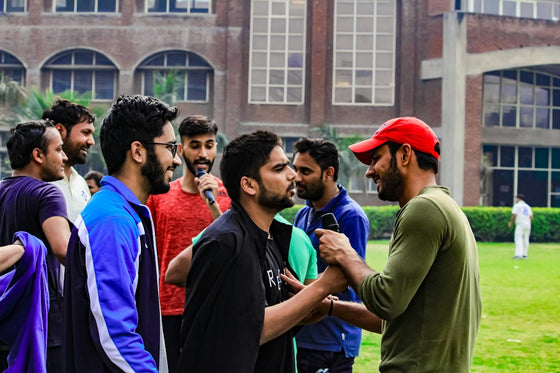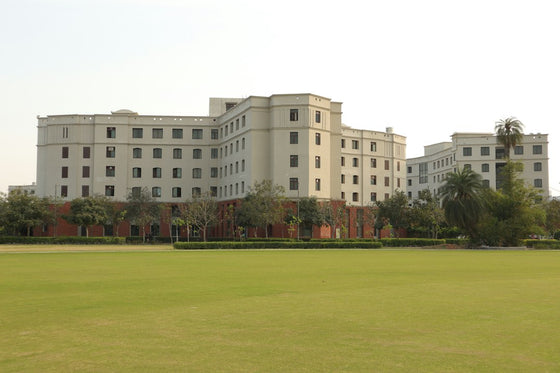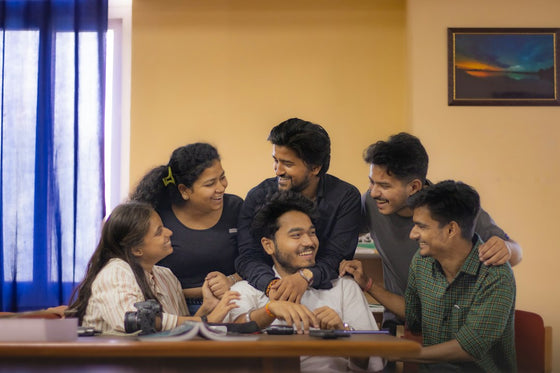







































































































































































































Featured image by Debashis RC Biswas on Unsplash
Your roommate just left for the pre-fest party in a fresh oversized tee, your entire hostel floor is buzzing, and you're sitting with three open PDFs and a lab report due Monday. This is the FOMO that nobody warns you about before JEE — the kind that hits different at 10 PM on a Friday when the bass from the campus amphitheater is vibrating through your walls.
Here's the truth: the students who figure out how to balance academics with college parties and fests aren't grinding harder than everyone else. They're just smarter about it. Let's break this down properly.
Why FOMO Hits So Hard in Engineering and Medical Colleges
Campus life at an IIT, NIT, BITS, or AIIMS isn't just about academics — it's a four-to-five year social experiment that shapes who you become professionally and personally. The fests, the hostel nights, the spontaneous road trips — these aren't distractions. They're the curriculum nobody prints in the syllabus.
But here's where it gets complicated. Your relative attendance requirement is 75%. Your mid-sem is in two weeks. Your internship portal opens next month. Every yes to a party feels like a no to your future, and every no to a party feels like a no to your present. That tension is real, and dismissing it with "just focus on studies" is genuinely terrible advice.
The Real Cost of Going Full Hermit Mode
Let's talk about what actually happens when you skip everything to maintain a 9+ CGPA in complete social isolation.
- Your network suffers. Half the job referrals, startup co-founders, and research collaborations you'll land in the next decade come from people you met at Mood Indigo, Kshitij, or Saarang — not from your textbooks.
- Your mental health tanks. Burnout in semester three is not a badge of honor. It's a warning sign that your approach isn't sustainable.
- You miss the cultural capital. Knowing how to hold a conversation, read a room, or lead a team at a fest — these are skills that show up in every interview you'll ever sit for.
- Regret is expensive. You can retake a backlog paper. You cannot re-attend your college's silver jubilee fest.
The Real Cost of Going Full Party Mode
Equally, let's not romanticize the other extreme. Some people treat their four years as one long post-JEE vacation, and the placement season hits them like a truck.
- A 5.5 CGPA closes real doors. Certain core companies, PSUs, and even some product firms have hard cutoffs. Knowing this upfront lets you make informed choices, not regretful ones.
- Backlogs compound stress. One uncleared paper can delay your degree. The math isn't worth it.
- Fests and parties have diminishing returns. Attending every single event burns you out just as fast as studying through everything. Selectivity is a skill.
The Actual Framework: How Smart Students Do It
Step 1 — Map Your Semester, Not Just Your Week
Pull up your academic calendar at the start of every semester. Identify the danger zones: mid-sem weeks, end-sem weeks, lab submission deadlines. Mark them in red. Everything outside those zones is your playground.
Most major college fests — Mood Indigo at IIT Bombay, Kshitij at IIT Kharagpur, Waves at BITS Pilani — are deliberately scheduled during relatively low-academic-pressure windows. Use that.
Step 2 — Prioritize by Energy, Not by Guilt
Not every party deserves your Saturday night. Ask yourself: will I remember this in five years? The annual tech fest with your department seniors? Probably yes. The third random hostel birthday party this month? Probably no.
- Assign your peak-energy hours to academics, not to scrolling through Instagram stories of events you're missing.
- Reserve your social energy for events with genuine upside — new people, new experiences, things you'll actually talk about later.
- Say no without guilt when you have a legitimate academic crunch. Your friends who matter will understand. The ones who don't weren't your people anyway.
Step 3 — The 2-Day Rule for Fests
If a college fest runs four days, commit to two days maximum during exam season, all four during a clean week. This gives you the experience without the academic carnage. Plan which events, workshops, or performances you specifically want to attend — not just "going to the fest" as a vague plan that eats twelve hours.
Step 4 — Show Up Looking Like You Belong
This sounds superficial but it matters more than people admit. Confidence is partly costume. When you walk into a fest or a campus event in something that actually represents your campus identity, you carry yourself differently.
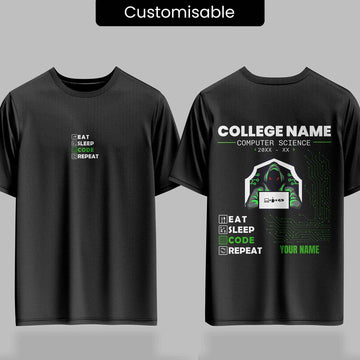
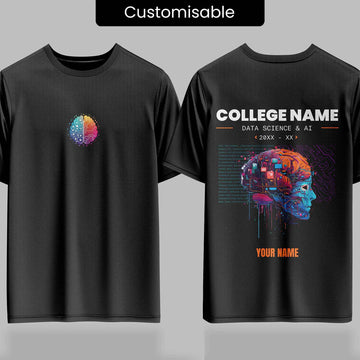
A lot of students from NIT Warangal, IIITs, and VIT have started treating their campus merch as an actual identity statement — not just a souvenir. When you're repping your college in a 320GSM heavyweight Campus Legend hoodie at an inter-college event, that's not just clothing. That's a conversation starter, a tribe signal, and a confidence booster rolled into one.
How to Recover Academically After a Big Fest
You went all in for Thomso or Techniche. Zero regrets. Now it's Sunday night and you have two weeks of academic backlog. Here's the recovery plan that actually works.
- Don't try to catch up on everything in one session. Triage — identify what's actually being tested in the next two weeks and start there.
- Talk to your professors. This sounds scary but most faculty at premier institutes have seen this cycle for twenty years. One honest conversation goes further than you think.
- Use your study group. The people you were at the fest with? They're in the same boat. Collective recovery is faster than solo panic.
- Block your calendar for the next four weeks. A post-fest academic sprint is only possible if you eliminate the next round of unnecessary commitments temporarily.
The Hidden Advantage of Being Present at Fests
Here's something placement cells won't put in an official notice: the students who are visibly present at college fests, who organize events, who network across campuses — they have an edge in interviews that's genuinely hard to quantify.
Soft skills, leadership, crisis management, cross-functional coordination — every interviewer knows these things don't come from textbooks. They come from staying up till 3 AM fixing the lighting rig for your college's cultural night or managing a crowd of two thousand at a technical workshop.
If you're wearing a custom Batch Nexus hoodie from your graduation batch and someone at a campus event asks about it — that's a network conversation that started from showing up. These micro-connections compound over time.
The CGPA vs. Experience Debate — Settled
Here's the actual answer nobody wants to give you: you need both, and the ratio shifts depending on what you want after graduation.
- Targeting PSUs, civil services, or GATE? Your CGPA is a hard filter. Protect it fiercely.
- Targeting product startups, consulting, or entrepreneurship? Your experiences, projects, and network carry disproportionate weight.
- Targeting core research or MS/PhD abroad? Your CGPA matters AND your research exposure matters — both come from showing up in the right places.
There is no universal answer. But there is a universal mistake: treating this as binary. The goal is to collect both good grades and good stories.
Final Word: Own Your College Years Like You Mean It
The FOMO doesn't go away after college. It just changes shape — you'll FOMO over job offers, startup ideas, cities you didn't move to. The skill you're actually building right now is learning how to make intentional choices under pressure. That's the real curriculum.
So go to the fest. Go dressed in something that represents where you're from — whether that's IIT Delhi merch at a North Zone inter-college or your college's limited 240GSM oversized tee at your own cultural night. Show up, participate, build your people. Then come back, open your laptop, and put in the work.
Both versions of you — the one at the fest and the one at the desk — are building the same person. Don't sacrifice either one completely.