




































































































































































































Featured image by Harsh Yadav on Unsplash
Your placement cell coordinator will never tell you this: some of the most valuable companies in India were built by people who walked away from the very degree you're grinding for. Not because they failed. Because they saw something bigger than a 40 LPA package and decided to chase it in a hoodie at 2 AM instead of a suit at 9 AM.
These aren't motivational poster stories. These are real, messy, often broke-for-years journeys of IIT dropouts who built million dollar startups — and the lessons they leave behind are worth more than any placement prep session.
Why IIT Dropout Startup Stories Hit Different
There's a specific kind of pressure that lives inside IIT hostels. You got through JEE — statistically one of the hardest filters in human history — and now everyone expects you to cash in that ticket.
Parents. Relatives. That one uncle at every family function. The entire system is designed to funnel you toward a predictable exit.
But a handful of people every year look at that pressure and say: not yet. Sometimes not ever. Here's what happened when they did.
1. Sachin Bansal & Binny Bansal — Flipkart (IIT Delhi)
Yes, both Bansals attended IIT Delhi. And yes, they left Amazon jobs — not IIT itself — but the spirit is identical: walking away from the obvious safe path.
In 2007, they started Flipkart from a small Bangalore apartment, selling books online when most Indians didn't trust the internet with their money.
- Year 1 revenue: Essentially zero. They delivered books themselves.
- The turning point: Recognizing that logistics, not product, was the real problem in Indian e-commerce.
- Exit: Walmart acquired Flipkart in 2018 for $16 billion.
The lesson: The idea doesn't have to be original. The execution has to be obsessive. They didn't invent e-commerce — they just solved it for Bharat.
2. Kunal Shah — CRED (Dropped Out of Wilson College, then Built on IIT Network)
Kunal Shah isn't an IIT graduate. But his story belongs here because he actively sought out IIT campus networks, hired IIT talent aggressively, and built FreeCharge and then CRED by thinking the way IIT engineers think — first principles, not convention.
FreeCharge sold to Snapdeal for $400 million in 2015. CRED hit unicorn status in 2021.
- He famously dropped out of his MBA at Narsee Monjee to start his first company.
- His framework — delta 4 theory — is now taught in startup bootcamps globally.
- CRED's genius wasn't the product. It was the audience: high-trust, high-spend credit card users nobody else was chasing.
The lesson: You don't need a degree to think at an IIT level. But you do need to be ruthless about identifying underserved, high-value markets.
3. Ritesh Agarwal — OYO (Dropout, Not IIT — But the Campus Culture Parallel Is Exact)
Ritesh dropped out of Indian School of Mines (now IIT (ISM) Dhanbad) at 17 to go all-in on OYO. He lived in his own budget hotels for months to understand the product.
OYO today operates in 80+ countries and has been valued at over $9 billion.
- Age when he started: 17. You were probably still figuring out your branch at 17.
- Capital raised in first round: ₹30 lakh from Lightspeed. He pitched it wearing a plain tee in a co-working space.
- Key move: He applied to Thiel Fellowship — a $100,000 grant for people who agree to drop out and build — and won.
The lesson: Proximity to the problem matters more than proximity to a degree. Ritesh literally lived the problem he was solving.
4. The Founders of Zerodha — Nikhil Kamath (No IIT, Full Dropout Energy)
Nikhil Kamath dropped out of school at 16 and started trading at 17. He and his brother Nithin built Zerodha, India's largest stockbroker by active users, without a single rupee of venture capital.
Zerodha crossed ₹2,000 crore in profit in FY23. Bootstrapped. Zero VC.
- They disrupted HDFC Securities and Sharekhan by simply charging less and building better tech.
- Their secret weapon: Kite, a trading platform built in-house that's cleaner than anything legacy brokers ever shipped.
- Nikhil's take on degrees: "The degree gives you credibility. The street gives you competence. I chose the street."
The lesson: You don't always need investors. You need a market that's been overcharged and underserved. Then you need to show up every single day.
5. Vijay Shekhar Sharma — Paytm (Delhi College of Engineering, Almost-Dropout)
VSS, as he's known, struggled so hard in DCE that he failed exams, considered quitting multiple times, and ran a web content company from his hostel room just to pay rent. He barely spoke English in a college where English was the social currency.
Paytm today is India's most recognized fintech brand. Post-demonetization in 2016, VSS became one of the most talked-about entrepreneurs on the planet.
- His lowest point: Living on ₹8,000 a month in Delhi, turning down a job because he believed in his idea.
- The demonetization moment: Paytm was ready when the entire country suddenly needed digital payments. That readiness wasn't luck — it was 8 years of grinding.
- Net worth at peak: Over $2.4 billion. From a hostel room idea.
The lesson: Being underestimated is a resource. VSS used every rejection and every failure as data, not identity.
What Every IIT, NIT, and BITS Student Can Actually Take From These Stories
Before you romanticize dropping out — don't. That's not the point. The point is the mindset, not the action.
These founders share a set of behaviors that have nothing to do with their degree status:
- They identified problems nobody else wanted to solve — budget hotels, rural e-commerce, overpriced broking, failed payments infrastructure.
- They stayed dangerously close to their user — Ritesh lived in his hotels. Sachin and Binny delivered books personally.
- They optimized for learning speed, not salary — Every bad month taught them something a course never could.
- They wore their struggle lightly — These guys weren't performing hustle. They were just too focused to care about optics.
Whether you're at IIT Bombay, grinding through your third year at NIT Warangal, or pulling all-nighters at BITS Pilani — the campus is a lab. Use it like one.
The Secret These Founders Never Post About
Every single one of them had a phase where they looked absolutely stupid to everyone around them.
Friends got placed. They got rejected. Families worried. They kept building. There's no glamorous montage for that phase — just late nights, cold food, and a stubborn refusal to accept that the conventional path was the only path.
The students who eventually build things wear that phase like a badge. Not on their LinkedIn. Just internally. It becomes the fuel.
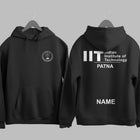
And yeah, a lot of them wore beat-up hoodies through all of it. There's something about a good heavyweight hoodie — the kind that survives three years of hostel life — that just makes 2 AM ideation feel right. The 320GSM Campus Legend hoodies from KS Verse are exactly that kind of piece: built for the long session, not the photoshoot. If you're at IIIT or VIT and you spend half your life in the hostel common room debating startup ideas — you know what we're talking about.
So What's Your Move?
You don't have to drop out. You don't have to reject your placement offer. But you do have to answer one question honestly:
Are you building skills, or just building a resume?
The IIT dropout startup stories that actually work aren't about rebellion. They're about clarity. These founders knew — with unusual certainty — what problem they were going to spend years on. That clarity is the real output of a technical education, whether you finish the degree or not.
- Use your campus network like it's your first investor network — because it literally is.
- Treat every hackathon, project, and internship as a live experiment, not a line on your CV.
- Find the intersection of what frustrates you and what you can actually build. That gap is your market.
The next IIT dropout who builds a billion-dollar company is currently in a hostel room somewhere, probably in a hoodie, probably being told they're wasting their potential. Maybe that's you. Maybe it's the person in the bunk next to you.
Either way — stay building.