






































































































































































































Featured image by Aswin Thomas Bony on Unsplash
Most study groups are just group chats where everyone panics together at 2 AM. You've been there — six people in a hostel room, one person actually explaining stuff, three people on their phones, and two people who showed up just for the chai. That's not a study group. That's a collective anxiety session with snacks.
A study group that actually works is a different animal. It's structured, intentional, and honestly? Kind of rare on campus. Here's how to build one that moves your CGPA instead of just your stress levels.
Why Most Study Groups Fail Before Mid-Sems Even Hit
Before we fix it, let's be honest about why it breaks. The average college study group dies within two weeks, and the reasons are embarrassingly predictable.
- Too many people: Adding everyone from your batch feels inclusive until no one can agree on a time, place, or even which subject to cover.
- No clear purpose: "Let's study together" is not a plan. It's a vibe. Vibes don't get you through Thermodynamics.
- Freeloaders: Every group has that one person who takes notes but never contributes. Everyone knows who it is. Nobody says anything.
- Zero accountability: When there's no structure, attendance becomes optional and the group chat slowly shifts to memes.
Acknowledging these upfront is half the battle. The other half is what you're about to read.
Step 1 — Choose Your Members Like You're Drafting a Team
The ideal study group size is 3 to 5 people. Not 10. Not "the whole floor." Three to five is the sweet spot where everyone is accountable and everyone contributes.
When picking members, look for these qualities:
- Complementary strengths: One person who's great at theory, one who's fast at numericals, one who asks the annoying "but why?" questions that actually matter.
- Similar seriousness levels: A 9-pointer and someone who's okay with scraping 6 will always clash on priorities. Match your energy first.
- Schedule compatibility: Sounds boring, but a group that can never physically meet is just a group chat.
- Accountability mindset: You want people who'll call you out, not people who'll let you slide because confrontation is awkward.
Don't add someone just because they're your friend. Add them because they make the group better. Friendship and academic utility are not the same thing.
Step 2 — Set Ground Rules on Day One (Seriously, Day One)
This is the step everyone skips and then regrets. Spend your first 20 minutes not studying, but setting the rules of how you'll study.
Decide on these upfront:
- Meeting frequency — twice a week is usually the sweet spot for engineering schedules.
- Duration per session — 90 minutes is the human brain's upper limit for quality focus. Not 4 hours. 90 minutes.
- No-phone policy or phone-at-the-door policy. Pick one and enforce it.
- Preparation requirement — everyone comes having read the material. Sessions are for discussion, not first-time reading.
- Rotating leadership — one person runs each session. Keeps everyone invested and stops one person from burning out.
Write it down. Share it in the group chat. Make it real.
Step 3 — Structure Every Session Like a Mini Lecture Hall
Unstructured sessions feel productive but rarely are. You need a session format that you repeat every time until it becomes muscle memory.
A Session Template That Actually Works
- First 10 minutes: Quick recap — everyone says one thing they understood from last time and one thing they're still confused about.
- Next 50 minutes: Deep work — one person teaches a concept, others ask questions. Rotate who teaches each time. Teaching is the fastest way to learn.
- Next 20 minutes: Problem-solving together — work through PYQs or assignment problems as a group.
- Last 10 minutes: Assign individual prep for the next session. Everyone knows what they're responsible for before they leave.
This 90-minute format is repeatable, scalable, and it works whether you're cracking DSA at an IIIT campus or grinding through machine design at an NIT.
Step 4 — Pick the Right Environment (Your Hostel Room Isn't It)
Environment is underrated in every study group conversation, and it shouldn't be. Your hostel room has too many distractions, too many interruptions, and that one roommate who always starts playing music exactly when you hit flow state.
Better options:
- Central library — quiet zones, whiteboards if you're lucky, and a natural pressure to focus.
- Department labs after hours — if you can get access, this is gold. Relevant equipment, fewer distractions.
- Empty classrooms — often available in the evening and feel like a real study space without the library's silence rules.
- A corner of the campus café — for lighter revision sessions where you need ambient energy, not silence.
The right space signals to your brain that it's time to work. Dress like you're going somewhere, show up like you mean it. Speaking of which — there's something to be said for that mental shift when you pull on a solid 320GSM heavyweight hoodie before heading to the library at 9 PM. It sounds small. It isn't. The physical act of getting ready for a session sets intention.
Step 5 — Handle Conflict Before It Kills the Group
Every study group hits a rough patch. Someone stops preparing. Someone dominates every session. Someone just… disappears for a week. The groups that survive are the ones that address it directly instead of letting resentment fester.
Build in a monthly "retrospective" — 10 minutes at the end of a session where everyone shares one thing the group is doing well and one thing to improve. Make it structured so it doesn't get personal.
If someone consistently isn't holding up their end, have the conversation. Privately, directly, without being harsh. Most of the time, people don't even realize they've checked out.
The Digital Layer — Tools That Help Without Becoming a Distraction
A study group in 2025 needs a light digital infrastructure. Light being the keyword.
- Notion or Google Docs: Shared notes, session plans, and topic trackers. One document everyone can edit.
- A dedicated group chat — separate from your general batch chat: Keep it strictly academic. No memes, no random forwards. Those belong in the other group.
- A shared PYQ folder: Previous year questions are the most valuable study resource you have. Pool them together.
If you're at one of the NITs grinding through semester prep, a well-organized shared folder can be the difference between going in blind and going in confident. Students at places like NIT Trichy or NIT Warangal often build these systems organically — now you have a template to formalize it.
How to Know Your Study Group Is Actually Working
Green flags to look for after 3 to 4 weeks:
- You're consistently meeting at scheduled times without anyone chasing people.
- Everyone can teach at least one concept they didn't understand before joining.
- Your individual preparation quality has gone up because you know people are depending on you.
- Sessions end on time and everyone leaves with a clear next step.
If these boxes are checked, you've built something genuinely rare on campus.
And honestly? The relationships you build in a real study group are some of the most underrated connections you'll make in college. These are the people who'll be in your professional network, your startup co-founders, your reference letters. The batch bond that forms when you've actually ground through something hard together is different — and that's worth more than a shortcut to a decent grade.
For students at IIT Delhi or BITS campuses where the academic culture is especially intense, a working study group isn't a nice-to-have. It's infrastructure.
One Last Thing — Make It Feel Like Your Own
The best study groups have an identity. A name, an inside joke, a ritual. Something that makes showing up feel like belonging to something, not just attending a session.
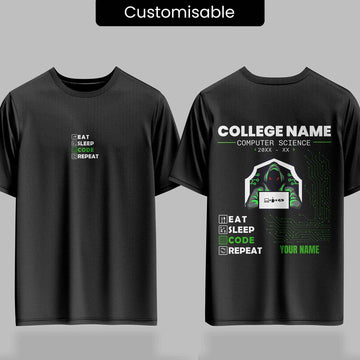
Some groups get Batch Nexus customizable merch made — matching tees that are stupidly specific to their batch and department. Sounds extra. Feels like culture. And culture is what keeps a group together when motivation dips, which it will.
Build the group like you mean it. Run the sessions like you respect each other's time. And show up consistently — because the study group that actually works is the one that actually meets.
Check out the full campus drops collection if you want to rep your campus while you're at it. The 240GSM oversized tees are basically the unofficial uniform of every serious study session happening in hostels right now.