




































































































































































































Featured image by Aswin Thomas Bony on Unsplash
Your senior just landed a ₹45 LPA AI/ML role at a top product company. You're sitting in your hostel room wondering if your DSA grind and one Coursera certificate are enough. Spoiler: they're probably not — but there's still time to fix that before 2026 placement season hits.
AI/ML roles are no longer the unicorn offers reserved for 9-pointers with three research papers. They're scaling fast across campuses, and companies are casting a wider net — but they're also raising the bar on what "ready" actually means.
Why AI/ML Roles Are Eating the 2026 Placement Season
The numbers don't lie. In 2024-25, AI/ML-related job postings from top recruiters at IITs and NITs grew by over 60% compared to the previous cycle. By 2026, analysts expect that number to climb further.
It's not just Google and Microsoft anymore. Fintech startups, healthtech firms, manufacturing giants, and even legacy PSUs are hiring ML engineers, data scientists, and AI product managers straight from campus.
The demand is real. The question is whether your skillset is real too.
What Companies Actually Look for in AI/ML Campus Hires
Here's where most students fumble — they think completing an ML course means they're placement-ready. Companies know the difference between someone who watched Andrew Ng and someone who can actually ship a model to production.
The Non-Negotiable Technical Stack
- Python — deeply, not just syntax: Object-oriented programming, efficient data structures, writing clean, scalable code. Not just Jupyter notebooks.
- Mathematics that actually matters: Linear algebra, probability, statistics, and calculus. If you can't derive gradient descent, you can't defend your model choices in an interview.
- Core ML algorithms: Regression, classification, clustering, ensemble methods — and crucially, when to use which.
- Deep Learning fundamentals: CNNs, RNNs, Transformers. At minimum, you should understand attention mechanisms without googling mid-interview.
- Frameworks: PyTorch is the current industry favourite. TensorFlow still matters. Hugging Face is rapidly becoming essential for NLP roles.
- MLOps basics: Docker, model deployment, basic understanding of pipelines. Senior engineers are genuinely impressed when a fresher knows this.
- SQL and data wrangling: Pandas, NumPy, and the ability to query databases — because most of your job will be cleaning messy data, not building fancy models.
The Soft Skills Nobody Talks About
- Communicating model decisions: Can you explain why your model failed to a non-technical stakeholder? This separates good hires from great ones.
- Problem framing: Companies give vague prompts in interviews. The ability to structure an ambiguous problem into a solvable ML task is gold.
- Research reading habits: Skimming arXiv papers and understanding recent developments like LLM fine-tuning or diffusion models signals genuine passion — which recruiters can spot instantly.
The Honest Reality Check: Where Most Students Are Falling Short
Students from campuses like IIT Bombay and NIT Warangal have strong academic foundations — but academic ML and industry ML are two very different games.
The three biggest gaps we see:
- Project depth vs. project quantity: Having five shallow Kaggle projects is worse than having one deeply understood end-to-end ML project with real deployment experience.
- Ignoring system design: ML system design — how do you serve a model to a million users? — is being asked at even mid-tier product companies now. Most students have zero prep here.
- Skipping the maths: You cannot bluff your way through "explain the bias-variance tradeoff in your last project" if you don't actually understand it. Interviewers know.
Your 6-Month Placement Prep Roadmap for AI/ML Roles
If placement season is 6 months away, here's how to stop panicking and start building. This isn't a generic checklist — this is what actually converts to offers.
Months 1-2: Foundations First, No Shortcuts
- Revisit your probability and statistics. Khan Academy + StatQuest on YouTube. Free, fast, effective.
- Complete fast.ai's Practical Deep Learning course — it's hands-on and doesn't put you to sleep.
- Build one end-to-end project: data collection, cleaning, modelling, evaluation, and a basic Flask or FastAPI deployment. Document everything on GitHub.
- Start LeetCode — yes, even for ML roles. Most companies still screen with DSA rounds. Target 3-4 problems daily, focus on arrays, graphs, and dynamic programming.
Months 3-4: Go Deep, Not Wide
- Pick one specialisation: NLP, computer vision, or tabular/structured data. Go deep into that domain rather than surface-skimming all three.
- Read and implement at least two research papers. Recreating results from a paper — even a simple one — is a massive interview differentiator.
- Start contributing to open-source ML projects on GitHub. Even documentation fixes count — it shows you can navigate real codebases.
- Learn Docker basics. Containerise one of your existing projects. It takes a weekend and looks incredible on a resume.
Months 5-6: Interview Mode, Full Send
- Mock interviews — at least two per week with peers or on platforms like Pramp and Interviewing.io.
- Prepare your project narratives. For each project: what was the problem, what approach did you take, what didn't work and why, what were the results? Know this cold.
- Prep ML system design using resources like "Designing Machine Learning Systems" by Chip Huyen. Non-negotiable for top-tier roles.
- Attend company pre-placement talks at your campus. Network. The hiring manager who saw your face at the PPT is more likely to shortlist you.
The Resources Worth Your Time (And the Ones That Aren't)
Worth it:
- fast.ai — practical deep learning, free, brilliant
- Andrej Karpathy's YouTube — if you want to actually understand neural networks
- CS229 (Stanford ML course) — for rigorous mathematical foundations
- Kaggle competitions — even finishing in the bottom 50% teaches you more than any course
- Papers With Code — to stay current without drowning in arXiv
Not worth your time right now:
- Collecting certificates from 15 different platforms — nobody cares
- Finishing 10 surface-level projects just to pad your resume
- Spending three months on theory without writing a single line of real code
Campus Life While Prep Mode is On: You're Allowed to Be Human
Look, not every hour of your third or fourth year needs to be a grind montage. The students who crack the best AI/ML roles aren't the ones who burned out by October — they're the ones who paced themselves and stayed consistent.
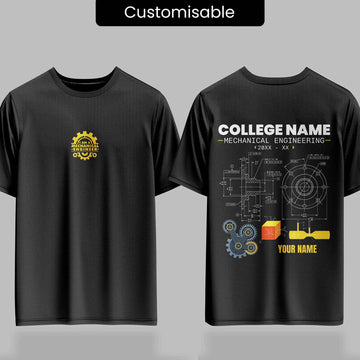
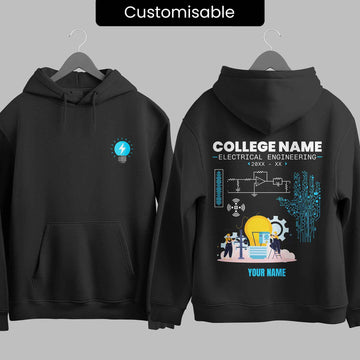
If you're a student at BITS Pilani or grinding through sem projs at IIIT, you know that the late-night debugging sessions hit different when you're wearing something you actually vibe with. The 320GSM heavyweight hoodies from KS Verse have quietly become the unofficial uniform for hostel grind culture — warm enough for cold server rooms, built to last longer than your placement stress.
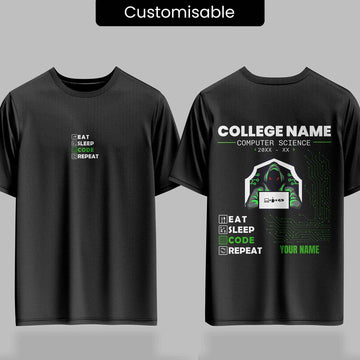
The 240GSM oversized tees are a staple for those casual PPT days when you want to look put-together without trying too hard. Campus identity is real, and how you carry yourself matters — even to yourself.
Don't Sleep on the Non-IIT Advantage
Here's something your seniors won't always tell you: recruiters from product companies are actively expanding their campus reach beyond the top five IITs. If you're at an NIT or IIIT with a strong portfolio and genuine ML skills, you are a more attractive hire than a brand-name student with a shallow skillset.
Students from NIT Trichy, NIT Rourkela, and VIT have been landing AI/ML roles at top product firms — not because of their college name, but because they showed up with real, demonstrable skills and projects that could speak for themselves.
The playing field is more level than the placement cell WhatsApp group panic would have you believe.
The Bottom Line: Skill-Ready Beats Panic-Ready Every Time
AI/ML roles in 2026 placements are a real, scalable opportunity — but they reward preparation, not desperation. The students who land these roles aren't necessarily the smartest in the room. They're the most consistent, the most genuinely curious, and the ones who built real things instead of just watching tutorials about building real things.
Start with one project. Go deep. Document it. Deploy it. Then move to the next one. Repeat that cycle for six months and you'll walk into placement season with something most candidates don't have: actual evidence of what you can do.
The offer letter you want is earned in the months before anyone ever sees your resume — not the week before the interview. Start now.