













































































































































































Featured image by Creab ThePolymath on Unsplash
Let's be honest — you had the entire semester. You had the notes, the PYQs, the YouTube playlists. And yet, here you are, 11 PM before a 9 AM paper, running on chai and regret. This semester exam survival guide isn't going to shame you. It's going to get you through tonight.
Why All-Nighters Fail (And How Yours Won't)
Most all-nighters collapse not because the student is lazy, but because they're disorganized. You open your laptop, get distracted, make three cups of chai, and suddenly it's 3 AM and you've covered exactly one unit.
The difference between a productive all-nighter and a wasted one is a system. Here's how to build one in the next 30 minutes before you start.
Step 1: Do the Triage First
Before you touch a single page, open the syllabus and the PYQ paper. Circle what's been asked the most. In most engineering and medical exams, 70% of marks come from 30% of the syllabus. Find that 30% and make it your entire night.
- Sort topics into: High weightage + Easy, High weightage + Hard, and Low weightage
- Attack High weightage + Easy topics first — quick wins build momentum
- Allocate max 40% of your time to Hard topics — know when to move on
- Skip Low weightage topics entirely if time is short. No mercy.
Setting Up Your Hostel War Room
Your environment is doing more damage to your focus than your phone is. A cluttered desk, a noisy wing, or the wrong temperature can tank your concentration without you even realizing it.
The ideal all-nighter setup is simpler than you think. You're not building a NASA command center — you're minimizing friction so your brain can actually work.
- Desk clear, phone in another corner — not on silent on the desk. Across the room.
- Warm yellow light if possible — harsh white light at 2 AM is brutal on the eyes
- Noise-cancelling earphones or a brown noise loop on YouTube. Game changer.
- Keep water on the desk. You'll forget to drink and wonder why your brain feels foggy at 1 AM.
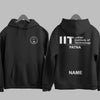
- Wear something comfortable you can actually study in — most people underestimate how much a scratchy collar or cold arms kill focus. The 320GSM heavyweight hoodies from KS Verse have basically become unofficial campus exam wear for a reason. Warm, relaxed, and heavy enough that you don't feel like you're sitting in your underwear.
If you're repping your campus, whether you're grinding at IIT Delhi or pulling late nights at NIT Warangal, the study room uniform matters more than people admit. Comfort = less fidgeting = more retention.
The All-Nighter Time Block System That Actually Works
Studying from 10 PM to 6 AM as one blob of time is how you burn out by midnight. Block your night into phases and protect each phase like it's a class you can't bunk.
Phase 1: 10 PM – 12 AM (Peak Focus Window)
This is your sharpest block. Do the hardest, most conceptual content here. Derivations, theory-heavy units, anything that needs actual thinking. No music with lyrics. No checking results on Instagram. Deep work only.
Phase 2: 12 AM – 2 AM (Consolidation Mode)
Your peak is fading, but you're not dead yet. Switch to PYQ solving, formula revision, and re-reading notes you made earlier. This is also when you write out key points by hand — yes, physically write. Muscle memory is a real thing for exams.
- Solve at least 3-5 PYQ questions per major topic
- Make a one-page cheat sheet of formulas (you're not allowed to carry it, but making it forces memory)
- Short 10-minute break here — walk to the corridor, don't lie down
Phase 3: 2 AM – 4 AM (The Danger Zone)
This is when most students crash. Your circadian rhythm hits a trough. Energy drops. Everything feels pointless. This is normal — push through with strategy, not willpower.
- Switch to lighter tasks: flashcards, revision of earlier notes, reading summaries
- Caffeine window: one strong chai or coffee here, not before. Too early and you crash before dawn.
- If you genuinely cannot keep your eyes open — take a 20-minute power nap. Set TWO alarms. Lie on the floor, not the bed.
Phase 4: 4 AM – Exam Time (Survival and Retention)
Don't try to learn new things here. Only revise what you already know. Go through your one-pagers, your cheat sheet, the PYQ answers you wrote. Eat something real — a banana, bread, anything. Your brain runs on glucose.
What to Eat and Drink (and What to Avoid)
The hostel mess is closed. The maggi has been eaten. Here's what actually helps versus what the internet lies to you about.
- What works: Bananas, peanuts, dark chocolate, light snacks, water, one or two cups of chai/coffee spaced 3 hours apart
- What destroys you: Energy drinks (crash is brutal), heavy oily food (blood goes to digestion, not your brain), too much sugar
- The caffeine rule: One cup every 4-5 hours maximum. More than that and your hands shake and your reading comprehension tanks.
- Hydration is genuinely underrated — even mild dehydration reduces concentration significantly
The Morning-Of Exam Routine (Don't Skip This)
You survived the night. Now don't blow it in the last two hours. What you do between waking up and walking into the exam hall matters more than you think.
- Cold water on your face — not a full shower unless it wakes you up, not exhausts you
- 10-minute revision of your formula cheat sheet, nothing new
- Eat something. Non-negotiable. Empty stomach + stress = brain fog in paper.
- Reach the exam hall 10 minutes early. Late arrivals panic and forget everything they studied.
- In the first 5 minutes of the paper: read all questions, mark the ones you're sure about, start there.
If you're at BITS Pilani or grinding through the infamous end-sems at IIT Bombay, the morning energy you carry into that hall is half the battle. Look put-together even when you're not. It sounds shallow until you realize that confidence physically changes how you answer questions.
The Real Talk: How to Avoid This Next Semester
You're going to say "never again" at 4 AM. You might even mean it. So here's a realistic framework — not a productivity guru fantasy — that actually works in campus life.
- One hour per subject per week during the regular semester. Just one. That's it.
- Don't skip tutorials even when they feel useless — they're low-stakes practice for the actual paper
- Build a study group of 3 people max. More than that and it becomes a hangout session.
- PYQ solving starts at Week 10, not Week 15. Always.
And honestly? Make your campus experience count beyond just the CGPA grind. The Batch Nexus customizable merch from KS Verse that your seniors are wearing at convocation? That's not just drip — it's a reminder that college is a chapter, not just a semester. Browse what your campus community is repping at KS Verse's full campus drops — because between papers, you deserve to feel like you actually belong here.
Quick Reference: All-Nighter Cheat Sheet
Bookmark this. Screenshot it. Read it at 11 PM when you're panicking.
- Triage syllabus by PYQ weightage before you start
- Block your night into 4 phases — don't study in one continuous blur
- Peak focus work before midnight, revision after
- One coffee per 4 hours, water constantly
- 20-minute floor nap at 2-3 AM if needed — not on the bed
- Morning of: eat, do a light revision pass, arrive early
- In the paper: read everything first, answer confident questions first
You've got this. It's not your first all-nighter and it probably won't be your last. But with the right system, even a single night of focused studying can be the difference between scraping through and actually feeling good walking out of that hall. Now close this tab and get back to your books.