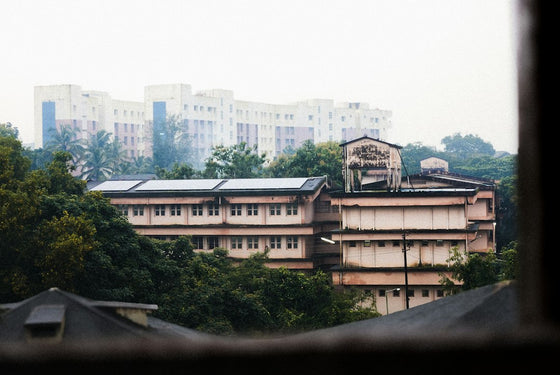













































































































































Featured image by Aswin Thomas Bony on Unsplash
You walked into that open book exam feeling like you'd finally caught a break. Notes allowed. Textbook on the desk. Cheat sheet in hand. And then the question paper hit you like a 3 AM fire alarm in the hostel — and suddenly nothing in your notes made any sense.
Open book exams at IITs are one of the most misunderstood academic formats in Indian engineering education. Students consistently underestimate them, underprepare for them, and then spend the next week explaining to their parents why their CGPA dropped when they had all their materials with them.
Here's the full breakdown — what these exams actually test, why they wreck unprepared students, and how to genuinely prepare for them.
What Open Book Exams at IITs Actually Test
Let's kill the myth right now. Open book exams are not memory tests with extra steps. They are higher-order thinking evaluations — and that changes everything about how you need to prepare.
Traditional closed-book exams test whether you memorized a formula or a derivation. Open book exams assume you have all of that and ask you to apply it to a novel situation the professor just invented at 2 AM while listening to jazz.
These exams specifically target:
- Conceptual depth — Can you explain why a formula works, not just where to find it?
- Problem synthesis — Can you combine two unrelated concepts to solve something you've never seen before?
- Analytical reasoning — Can you arrive at a logical conclusion under time pressure with imperfect information?
- Material navigation speed — Can you find what you need in 90 seconds or will you spend 40 minutes flipping pages?
If your exam strategy is "I'll look it up when I need it," you will run out of time. Guaranteed.
Why Open Book Exams Are Harder Than Closed Book — The Honest Truth
The Time Trap
The single biggest killer in open book exams is time. Professors know you have your materials. So they make the questions longer, more layered, and deliberately designed to slow you down if you don't already have a strong conceptual base.
A question that would take 5 minutes in a closed-book exam can take 25 minutes in an open-book format because it requires multi-step reasoning, not recall. You do the math on a 3-hour paper.
The False Confidence Trap
Students at IIT Delhi, IIT Bombay, and across every campus consistently report the same thing — they studied less for open book exams because they assumed the format would compensate. It doesn't. The format rewards preparation more than any other exam type, not less.
The Navigation Nightmare
Imagine you're 45 minutes into a paper, you know the concept exists somewhere in your 400-page textbook, and you cannot find it. That's not bad luck — that's a preparation failure. Your notes and materials are only useful if they're organized for retrieval under pressure.
How to Actually Prepare for Open Book Exams at IITs
Step 1 — Build a Concept Map, Not Just Notes
Before the exam, create a one or two page master sheet of how every major concept in the course connects. Not definitions. Connections. What leads to what. What formula applies under which conditions. What the exceptions are.
This is your real open book. Everything else is reference material.
- Use color coding to separate derivations, formulas, and application conditions
- Include page numbers next to each concept pointing to the textbook source
- Write your own example next to each formula — one you solved yourself
- Add common mistake warnings based on your tutorial and assignment errors
Step 2 — Create a Tabbed, Indexed Reference System
Your textbook without tabs is decoration. Spend two hours before the exam turning your reference materials into a searchable system.
- Tab every major chapter with sticky notes labeled by topic, not chapter number
- Build a quick-reference index on a separate sheet — concept name, page number, formula location
- Keep solved examples bookmarked separately from theory sections
- If digital notes are allowed, use Ctrl+F aggressively — but have headings organized for it
Step 3 — Practice Without Looking First
This sounds counterintuitive for an open book exam. It isn't. The best open book exam students practice problems completely closed-book first, then use materials only to verify or when genuinely stuck.
Why? Because if you can solve 70% of the problem without looking, you only need 30 seconds of reference time instead of 5 minutes. Over a 3-hour paper, that compounds into a massive time advantage over the student next to you who's flipping pages every 8 minutes.
Step 4 — Solve Past Open Book Papers Under Timed Conditions
This is non-negotiable. Simulate the actual exam environment with your actual materials open on the desk.
- Set a strict timer — no extensions
- Use only the materials you plan to bring into the real exam
- After the timer, note every question where you lost time searching for something
- Those gaps are your study priority for the next session
Students from NIT Trichy to IIT Madras who nail these exams have one thing in common — they treated mock sessions as real exams and real exams as slightly higher-stakes mock sessions.
Step 5 — Master the Art of the Annotated Textbook
Write in your textbook. Margin notes, underlines, personal summaries at the top of each page. Professors allow physical annotations in most open book formats, and a well-annotated textbook is worth more than a perfectly printed set of separate notes.
- Summarize each section in one line at the top of the page in your own words
- Circle the exact variable definitions — confusion about notation wastes enormous time
- Write cross-references when one section connects to another chapter
- Flag common question types with a small star or symbol
The Mindset Shift That Changes Everything
Stop thinking of open book exams as easier exams. Start thinking of them as performance exams. Like a musician who is allowed to have sheet music on stage — the sheet music doesn't make the performance easier. It just removes one barrier while raising the standard of everything else.
Your professor is not testing whether you memorized the Laplace transform. They're testing whether you understand when and why to use it, and whether you can apply it to something messy and real. That understanding lives in your head, not your notes.
Logistics Matter More Than You Think
Exam logistics are genuinely underrated. The student who walks in with their materials organized, their concept maps printed cleanly, and their tabs in place — they are already 20 minutes ahead of the student who walks in with a chaotic stack of unorganized sheets.
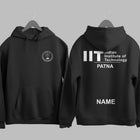
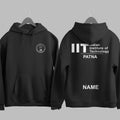
A lot of IIT students have started treating exam day logistics as seriously as the study itself. Show up sharp. The mental clarity of walking into an exam prepared — materials organized, sleep non-negotiable, dressed in something that doesn't make you feel like you're malfunctioning — actually matters. Those late-night study sessions in a KS Verse 320GSM heavyweight hoodie at 1 AM aren't just comfort, they're ritual. The kind of ritual that keeps you locked in when the rest of the hostel is doom-scrolling.
Quick Pre-Exam Checklist for Open Book Format
- Concept map printed and reviewed — one or two pages maximum
- Textbook tabbed and indexed — every major topic has a tab
- Past papers attempted under time pressure — minimum two full papers
- Common mistakes documented — your personal error log from assignments and tutorials
- Formula sheet organized by application condition, not by chapter order
- Sleep is non-negotiable — a tired brain cannot synthesize, and open book exams require synthesis
One Last Thing Nobody Tells You
Open book exams favor students who have actually engaged with the material throughout the semester — not the ones who crammed the night before. If you attended lectures, did tutorials seriously, and solved assignments without just copying, the open book format will feel like a gift. If you didn't, no amount of organized notes will save you.
This is the format that most accurately separates students who genuinely learned the course from students who successfully memorized it. Which one are you?
Whether you're grinding through mid-sems at IIT Kanpur or pulling all-nighters before end-sems at BITS Pilani, the preparation principles are identical. Build your understanding deep, organize your materials ruthlessly, and practice like the timer is already running.
And if you need something to make those long study sessions feel less like suffering — check out the full campus drops at KS Verse. The 240GSM oversized tees are what half your department is already wearing to every exam season study session. You might as well be comfortable while you conquer.