






































































































Featured image by Church of the King on Unsplash
Your batchmate just got ₹3.5 lakh for sitting in a Canadian university lab for 12 weeks. Another one pocketed $3,000 from Google for writing open-source code from his hostel room. Meanwhile you're refreshing Internshala. This guide is your wake-up call — because GSoC, MITACS, and research fellowships are the most underrated money moves in the entire IIT-NIT ecosystem, and almost nobody talks about them properly.
Why Research Fellowships Are the Best-Kept Secret in Indian Engineering Colleges
Placements get all the hype. Competitive programming gets the Reddit threads. But research fellowships? They pay you real money, add insane weight to your resume, and — here's the part nobody says out loud — they are significantly easier to get than a FAANG internship if you start early.
We're talking programs where a CGPA of 7.5 is genuinely competitive, where your open-source contributions matter more than your CP rating, and where writing one good Statement of Purpose can unlock a summer in Europe or North America.
GSoC Stipend 2025: What Google Actually Pays Indian Students
Google Summer of Code is a remote, paid open-source program. You contribute to a real org — Mozilla, TensorFlow, Red Hat, whatever — for about 12 weeks. India falls under the medium stipend tier.
GSoC Stipend Breakdown for Indian Contributors
- Medium-sized project: $1,500 USD (approximately ₹1.25 lakh at current rates)
- Large project: $3,000 USD (approximately ₹2.5 lakh)
- Extended large project: $6,000 USD (approximately ₹5 lakh)
Stipends are paid in USD to your bank account. Tax implications apply — consult a CA if you're being finicky about it, but most students just file it under miscellaneous income.
GSoC Eligibility and What Actually Gets You Selected
- You must be 18+ and enrolled in a degree program (B.Tech, M.Tech, integrated — all valid)
- Applications open in January-February; coding period runs May to August
- The proposal is everything. Vague proposals die. Specific, well-researched proposals with a clear timeline get picked.
- Start contributing to your target org at least 2-3 months before applications open — mentors remember contributors
- IIT Bombay, IIT Delhi, and IIT Madras students consistently appear in GSoC accepted lists — but NITs and IIITs make that list too when proposals are strong
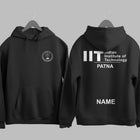
If you're from IIT Bombay and you're into open-source, your seniors who've cracked GSoC are probably wearing the same IIT Bombay merch as you. Go find them. Their Discord DMs are worth more than any YouTube tutorial on GSoC proposals.
MITACS Globalink Research Internship: The Canadian Cash Machine
MITACS Globalink is arguably the single highest-value research fellowship accessible to Indian undergrads right now. 12 weeks, Canadian university, faculty supervisor, and a stipend that converts beautifully.
MITACS Stipend Amount for Indian Students
- Stipend: CAD 9,000 (approximately ₹5.5 to 6 lakh depending on exchange rate)
- This covers housing, living costs, and travel partially — but the full CAD 9,000 goes to you
- Some universities also provide additional top-up grants of CAD 1,000 to 2,000
- Applications open in September-October for the following summer
MITACS Eligibility for IIT and NIT Students
- Must be enrolled in a Canadian-partnered Indian university — most IITs, NITs, BITS Pilani, and several IIITs are on the list
- Minimum CGPA requirement varies by university but 7.5 to 8.0 is a safe floor
- You apply to up to 7 projects simultaneously — choose strategically based on your research background
- Research experience matters most. A project under a professor, even a small one, is gold on your application
- Strong LORs from faculty who actually know your work — not the standard copy-paste recommendation
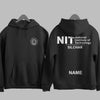
NIT Warangal and NIT Trichy students have been cracking MITACS consistently. If you're at either campus, check out NIT Warangal campus drops or NIT Trichy merch — your seniors who got MITACS exist and they will talk to you if you approach with a proper cold email.
Other Research Fellowships Worth Your Attention
DAAD WISE Scholarship (Germany)
- Stipend: €934 per month for 1.5 to 3 months
- Plus a one-time travel allowance
- Research at German universities and research institutes — Fraunhofer, Max Planck, TU Munich
- Open to students with strong academic record and basic research exposure
- Applications typically open in October for the following summer
SURGE Program — IIT Kanpur
- Summer Undergraduate Research Grant for Excellence — domestic but criminally underrated
- Stipend: ₹10,000 to ₹15,000 for the duration — not life-changing but adds a real research line to your CV
- Open to students from reputed institutions; IIT Kanpur also accepts external applications
- Great gateway fellowship if you're building toward MITACS or DAAD applications
S.N. Bose National Centre Scholarship (USA)
- Indo-US collaboration; you do research at American universities
- Stipend: $2,000 USD plus return airfare
- Fields: Physics, Chemistry, Math, CS, Atmospheric Sciences, Biotechnology
- Strong academic record and faculty endorsement needed
NIUS (National Initiative on Undergraduate Sciences)
- HBCSE-run program for science undergrads — physics, chemistry, biology, math
- Stipend and campus stay covered; niche but excellent for pure sciences students
The SOP and LOR Game: What Most Students Get Wrong
The biggest reason qualified students get rejected from MITACS and DAAD is a generic SOP. Not low CGPA. Not weak profile. Generic, copy-pasted intent letters that could belong to anyone.
- Open with the specific research problem you want to work on — not your life story
- Name the faculty member's actual paper and explain what you'd extend or question
- Connect your existing coursework or project work directly to the proposed research
- One page maximum. Dense, specific, confident. No fluff.
- For LORs — ask faculty who have seen your work under pressure, not just the ones with the biggest designations
This is the kind of strategy your seniors at IIT Delhi figured out the hard way. While you're building that profile, you might as well rep the campus right — the IIT Delhi collection has drops that actually look good in a Canadian lab Zoom call background.
Timeline: When to Apply for What
- September–October: MITACS Globalink applications open; DAAD WISE opens
- November: S.N. Bose scholarship applications
- January–February: GSoC organization list drops; start community engagement immediately
- February–March: GSoC contributor applications; SURGE program applications
- March–April: GSoC proposal submission deadline
- Results typically in April–May for most programs
The students who miss deadlines are always the ones who found out about the program one week too late. Bookmark this page. Set calendar reminders right now.
How to Build a Profile That Gets Selected
You cannot manufacture research experience in two weeks before the deadline. Here's the minimum viable roadmap:
- Get under a professor in your 2nd year — even if you're just running simulations or reviewing literature
- Contribute to one open-source project consistently for 3 to 4 months before GSoC applications
- Do one domestic fellowship (SURGE or similar) to have something to write about in international applications
- Document everything. GitHub commits, lab reports, project summaries — these become your SOP raw material
- Build a simple portfolio page or a clean LinkedIn — many international faculty Google you before shortlisting
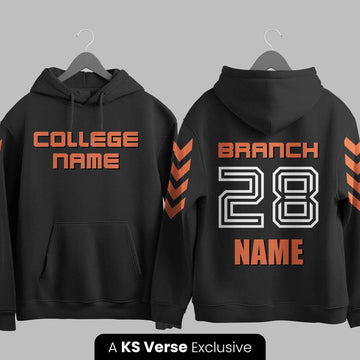
The students who pull off back-to-back fellowships — GSoC one summer, MITACS the next — are usually walking around campus in a campus legend-tier hoodie that matches their energy. The KS Verse 320GSM heavyweight hoodie has become weirdly synonymous with that archetype — the grinder who also has taste.
Tax, Banking, and Logistics: The Boring Stuff That Matters
- For GSoC: Google pays via international wire transfer — ensure your bank account supports SWIFT transactions; most SBI and HDFC accounts do
- For MITACS: You'll be on a Canadian student visa category; stipend is paid in CAD by the university directly
- For DAAD: Payments in EUR; some students use Wise for better conversion rates
- Report foreign income in your ITR under the appropriate head — most students earning under ₹7 lakh total have zero additional tax liability
- Start your passport application the moment you think you might apply to any international fellowship. Tatkal is stressful and avoidable.
Final Word: Stop Sleeping on This
Between GSoC, MITACS, and DAAD, a motivated IIT or NIT student can realistically earn ₹8 to 12 lakh across two summers — while building a profile that opens doors to MS admissions, research roles, and global networks that campus placements simply cannot provide.
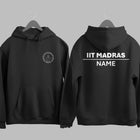
The information asymmetry is your advantage right now. Most of your batchmates still don't know MITACS pays CAD 9,000. Now you do. Use it. And while you're building that profile, wear something that actually represents where you came from — check out the full IIT Madras drop if that's home, or browse the complete universe of campus drops at KS Verse.
The fellowship season waits for no one. Your SOP won't write itself.