






































































































































































































Featured image by Church of the King on Unsplash
Everyone's obsessed with IIT Bombay placement packages and IIT Delhi alumni networks. But while the old guard keeps flexing, something quietly dangerous is happening in Raipur, Jodhpur, Mandi, and Bhilai. The new IITs — the ones people used to apologetically mention at family gatherings — are producing founders who don't wait for permission to build.
This isn't a feel-good story. It's a structural shift in how India's startup ecosystem actually works. And if you're sitting in a newer IIT right now, wondering whether your campus matters, this is the reality check you actually need.
Why the 'Prestige Hierarchy' Is a Trap That Old IITs Accidentally Built
Here's the uncomfortable truth: the older IITs optimized for placement season, not founder season. When your seniors are getting ₹40–80 LPA packages from Google and Goldman, the social pressure to follow that path is enormous. You don't deviate. You don't experiment. You grind DSA and pray for a PPO.
Smaller, newer IITs — IIT Bhilai, IIT Indore, IIT Ropar, IIT Mandi — don't have that pressure in the same suffocating way. The placement ceiling is lower (for now), which means the risk calculus for starting something actually shifts in your favor. When the "safe" path isn't as astronomically safe, ambitious students start asking different questions.
- Lower opportunity cost: Skipping a ₹12 LPA offer to build a startup hits differently than walking away from ₹1 Cr package.
- Fewer social comparisons: Smaller batches mean less of the toxic "what did you get?" energy that kills creative risk-taking.
- More faculty bandwidth: Professors at newer IITs often have more time and genuine interest in mentoring individual students on research and ventures.
- Hunger as fuel: Students at newer IITs have something to prove — and that chip on the shoulder? It's a legitimate competitive advantage.
The IIT Bhilai Effect: What's Actually Happening on the Ground
IIT Bhilai was established in 2016. It doesn't have a 60-year legacy, a sprawling alumni network, or a VC-funded incubator with a fancy name. What it does have is students who learned very early that the system wasn't going to hand them anything.
That mindset — build it yourself because nobody else will — is the exact DNA of a founder. It's not something you can teach in an entrepreneurship elective. It gets baked in through lived experience.
Across newer IITs, you're seeing a pattern:
- Student-run clubs becoming actual registered entities with revenue
- Final-year projects turning into funded deep-tech startups
- Alumni from just 3–4 batches back already raising seed rounds in climate tech, edtech, and SaaS
- Inter-IIT collaborations forming co-founder relationships across campuses
The pipeline is young, but it's real. And it's accelerating faster than most people tracking the Indian startup ecosystem realize. Check out the IIT Bhilai merch drop — even the campus identity is getting bolder and more distinct, which tells you everything about the energy shift happening there.
What New IIT Founders Are Actually Getting Right
They're Building in Unglamorous Sectors
IIT Bombay and IIT Delhi founders often gravitate toward consumer apps and fintech — sectors with existing VC playbooks and clear comps. New IIT founders, possibly because they're closer to Tier-2 and Tier-3 India geographically, are building for problems that don't have obvious investor decks yet.
Agritech from IIT Jodhpur. Rural logistics from IIT Bhilai. Industrial IoT from IIT Mandi. These aren't the flashy pitches that get covered by YourStory first, but they're the ones that solve problems with actual market depth.
They're Co-Founding Across Campuses
The Inter-IIT ecosystem — tech meets, cultural fests, online communities — is quietly becoming a co-founder matching network. A CS student from IIT Indore connecting with a mechanical engineer from IIT Varanasi isn't rare anymore. The best early-stage teams often emerge from these cross-campus friendships, not from the same hostel corridor.
They're Using Constraints as Design Principles
When your campus lab doesn't have the latest equipment, you learn to be resourceful. When your alumni network is thin, you learn to cold-email and get comfortable with rejection. These are not disadvantages — they are startup bootcamp in disguise. Every founder who raised money before their campus had a proper incubator has a story about figuring it out anyway. That figuring-it-out muscle is everything.
The Role of Campus Identity in Building a Founder Mindset
This might sound soft, but it's not: how proud you are of where you come from directly affects how boldly you act. Students who feel embarrassed or apologetic about their campus tend to shrink. Students who own their identity — who rep their campus hard — tend to move with more conviction.
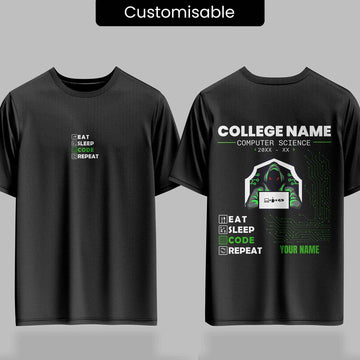
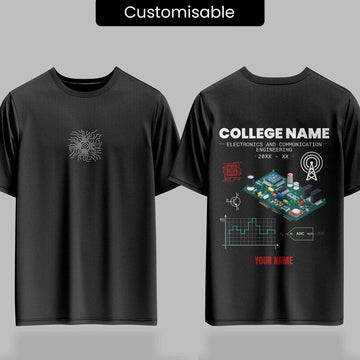
There's a reason you're seeing newer IIT students increasingly own their campus narrative. The 320GSM heavyweight hoodies from KS Verse that you spot at startup events and hackathons? They're not just merch. They're a signal. "I'm from here, and I'm building something." That's the energy.
It's the same reason the IIT Ropar drops and IIT Mandi campus collections exist — because campus pride isn't exclusive to the old guard, and it shouldn't be.
What You Can Actually Do If You're at a Newer IIT Right Now
Enough theory. Here's what moves the needle:
In Your First Two Years
- Join or start a technical/entrepreneurship club — even a WhatsApp group with 8 serious people beats a 200-member inactive society.
- Work on one real problem, not a project for a grade. Even if it fails, the problem-solving reps count.
- Build your network outside your campus — LinkedIn, Twitter/X, startup events in the nearest Tier-1 city. Your geography is not your ceiling.
- Find one professor doing actual research and offer to assist. Deep-tech startups often start as research papers.
In Your Third and Fourth Year
- Validate before you build. Talk to 50 potential users before writing a single line of code or filing any paperwork.
- Apply to every relevant grant and fellowship — BIRAC, DST NIDHI, Atal Innovation Mission, and YC's request for startups list. The bar for newer IIT founders is not higher; it's the same.
- Don't wait for placement season to decide. Make the startup/job decision 6 months before, not 6 days before.
- Find your co-founder early. Solo founder burnout in year one is extremely real and extremely common.
After Graduation
- The IIT tag still opens doors — use it, especially in investor conversations, but back it with substance fast.
- Build in public. Document your journey. The founder community rewards transparency and consistency over polish.
- Stay connected to your campus. Come back, mentor juniors, become the alumni network you wish you had.
The Bigger Picture: Why This Matters for India's Startup Decade
India needs founders from every geography, every tier of institution, every kind of background. The next unicorn solving cold-chain logistics in Chhattisgarh is probably not going to emerge from a Bandra co-working space. It's going to come from someone who grew up near that problem and had the technical training to attack it.
New IITs are distributed across India's geography intentionally. IIT Bhilai in Chhattisgarh. IIT Dharwad in Karnataka. IIT Palakkad in Kerala. That geographic distribution is a feature, not a bug, when it comes to building startups that solve real India's real problems.
The startup ecosystem has spent a decade celebrating IIT pedigree from the top 5. The next decade is going to be defined by founders from IIT batch 2022 at campuses you initially had to Google. Mark this post. Come back to it in 2030.
And if you're one of those founders-in-progress, wearing your campus name on a 240GSM oversized tee from KS Verse while you debug your MVP at 2am in the hostel — that's not a small thing. That's exactly where India's next chapter gets written. Browse the full campus drops collection and rep where you're from like you mean it.