



































































































































































































Featured image by AMIT RANJAN on Unsplash
Your placement season is 8 months away and your bank account is surviving on last month's pocket money. Meanwhile, that one guy in your hostel wing just made ₹15,000 writing Python scripts for some client in Canada. Freelancing isn't a myth — you're just not doing it right yet.
Why Upwork and Fiverr Are Your Best First Bet
You don't need a portfolio website, a LinkedIn with 500+ connections, or a CA to start. Both platforms give you a ready marketplace with clients already looking for what you can build, write, or design.
- Fiverr — You create a "Gig", clients come to you. Great for beginners.
- Upwork — You apply to job posts. More competitive, but higher earning potential.
Start with one. Master it. Don't spread yourself thin like your attendance percentage in the last semester.
Step 1: Pick a Skill That Actually Sells
Stop thinking you have nothing to offer. You're an engineering student — you're already in the top 2% of technical literacy in this country.
- Python scripting / automation
- Data analysis (Excel, pandas, Power BI)
- Web development (HTML, CSS, basic React)
- CAD drafting or 3D modelling
- Technical writing or research summaries
- Video editing or graphic design (Canva counts, seriously)
Pick ONE skill. Go deep, not wide. A ₹500 gig done brilliantly beats five ₹200 gigs done poorly.
Step 2: Build a Profile That Doesn't Look Like a First-Year's Resume
Your profile is your storefront. Treat it like placement season — except you're selling to the world, not just one HR.
- Use a clear, professional photo — no party pics, no sunglasses
- Write a bio in the client's language — focus on what you solve, not what you know
- Add relevant coursework, personal projects, or even college assignments as samples
- On Fiverr: your Gig title should be keyword-rich (e.g., "I will do Python data analysis and visualization")
- On Upwork: take the skill tests — they boost your visibility significantly
Step 3: The Proposal That Actually Gets Replies
Most beginners send copy-paste proposals and wonder why nobody responds. The client can smell a template from three time zones away.
The Winning Proposal Formula
- Line 1: Prove you read their job post — mention their specific problem
- Line 2-3: Tell them exactly how you'll solve it, briefly
- Line 4: Show one relevant sample or past work (even a college project)
- Line 5: Close with a low-friction CTA — "Can we hop on a quick chat?"
Keep it under 150 words. Clients are busy. Brevity signals confidence.
Step 4: Price Smart, Not Cheap
New freelancers race to the bottom on pricing. Don't. Charging ₹200 for a logo signals low quality, not great value.
- Start 20-30% below market rate — not 80% below
- On Fiverr, ₹800–₹1500 for a beginner gig is reasonable and credible
- Offer one free revision to reduce client hesitation initially
- Raise your rates after your first 3 reviews. No exceptions.
The Mindset That Actually Gets You Paid
Your first client will take longer to land than you expect. It took grind — late nights, cold proposals, zero responses for a week. That's normal. The ones who quit after 10 proposals never find out that the 11th one replies.
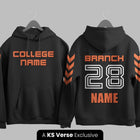
Picture this: it's 2 AM, deadlines stacked, but you're delivering a client project that'll pay your next month's mess fees — sitting in your KS Verse hoodie, the kind built for exactly this kind of grind. That's not a fantasy. That's a Tuesday for people who started.
Quick Wins Checklist Before You Start
- ✅ Profile 100% complete with photo and bio
- ✅ At least one sample work uploaded
- ✅ First Gig live on Fiverr OR first 5 proposals sent on Upwork
- ✅ Notifications on — respond to clients within 1 hour
- ✅ Realistic 30-day goal set (first ₹3,000, not first ₹30,000)
Your engineering degree got you in the room. Your skills will get you paid. Stop waiting for placement season to validate your worth — the market will do that for you, right now, if you show up.