



































































































































































































Featured image by Piyanshu Sharma on Unsplash
Three days before midsems, most students are still opening their lecture slides for the first time. And somehow, a handful of people walk out of the exam hall with a 9-pointer smile on their face. This isn't luck. This is a system — and the top students at IIT Delhi and IIT Kanpur have quietly been running it for years.
Here's the unfiltered breakdown of what actually works when you have 72 hours, 4 subjects, and zero room for error.
Why 3-Day Prep Actually Works (If You Do It Right)
Your brain retains information better under mild pressure. This is called the Yerkes-Dodson law, and every ranker at IIT Kanpur who seems suspiciously calm three days before midsems is unknowingly using it.
The key is strategic compression — not reading everything, but identifying the highest-yield topics and hammering those. Quantity of hours doesn't win. Quality of focus does.
Day 1: Triage Like a Surgeon
Day one is not for studying. Day one is for intelligence gathering.
Step 1: Build Your Target List
- Pull the last 3 years of midsem papers for each subject. Most department portals have them. If not, your senior batch WhatsApp group definitely does.
- Highlight the topics that appear in at least 2 out of 3 years. These are your high-probability bets.
- Cross-reference with your syllabus and mark what's been taught in class. Ignore the rest for now.
Step 2: Categorize Ruthlessly
- Tier 1 (Do First): Topics asked repeatedly + covered in class + moderate difficulty.
- Tier 2 (Do If Time Permits): Topics asked once + seems derivation-heavy.
- Tier 3 (Skip Unless Easy): New topics introduced this semester with no PYQ history.
Most students at IIT Delhi who consistently pull 8+ CGPAs will tell you the same thing — they don't study the full course. They study the exam.
Day 2: Deep Work Windows, Not Marathon Sessions
This is where execution matters. And execution gets sabotaged by one thing: the hostel common room.
The 90-Minute Block Method
Your brain can sustain deep focus for roughly 90 minutes before quality drops. Stop fighting it. Work with it.
- Set 3 deep work blocks of 90 minutes each, with 20-minute breaks in between.
- During each block: phone in another room, one subject only, door closed or library seat locked in.
- Use breaks to eat, walk, or stare at the ceiling. Not Instagram.
What to Actually Do in Each Block
- First 20 minutes: Read through your handwritten notes or the most concise resource you have (not the full textbook).
- Next 40 minutes: Solve PYQs from your Tier 1 list. Don't just read solutions — write them out.
- Last 30 minutes: Close everything and try to recall key derivations, formulas, or concepts from memory. This is called active recall, and it's the single most evidence-backed study technique in existence.
Students at IIT Kanpur who consistently outperform the class average aren't grinding 16-hour days. They're protecting their focus windows like they're protecting their CGPA — because they are.
The Gear That Doesn't Distract You
Sounds ridiculous until you live in a hostel at 11 PM and your roommate decides it's the perfect time to blast EDM. Your environment is either helping or hurting your prep.
A lot of students swear by the comfort-focus connection — when you're physically comfortable and not overthinking what to wear, your brain stays in the zone longer. That's why you'll spot top performers in their go-to KS Verse 320GSM heavyweight hoodies during exam season. It's not a fashion statement. It's a ritual. Same hoodie, same focus, same output.
Check out what's already become the default exam-season uniform across campuses — the campus drops collection has something for every college rep who takes their academics as seriously as their fits.
Day 3: Consolidation, Not Cramming
The biggest mistake students make on the final day is trying to learn new things. Day 3 is not for learning. It's for locking in what you already know.
Morning: Formula Sheet Finalization
- Create a single A4 sheet per subject with every formula, key theorem, and derivation shortcut you need.
- Write it by hand. The act of writing reinforces memory far better than typing.
- This sheet is your last-minute read before you enter the exam hall.
Afternoon: Mock Simulation
- Set a timer for the actual exam duration.
- Attempt a full PYQ paper without looking at notes.
- Don't grade yourself for perfection — grade yourself for identifying gaps you can still close in 4-6 hours.
Evening: Targeted Gap Filling
- Only revisit the specific questions you blanked on in your mock.
- Don't restart topics. Patch the holes, not the whole wall.
- Sleep by midnight. This is non-negotiable. Sleep consolidates memory. One good night's sleep is worth three hours of zombie-mode studying.
Subject-Specific Hacks That Actually Work
Mathematics / Engineering Maths
- Prioritize problem types over theory. Midsems are almost always calculation-heavy.
- If you can solve 5 variations of the same problem type, you own that topic.
- Memorize boundary conditions and standard results — they show up constantly.
Physics / Engineering Sciences
- Derivations are high-reward in midsems. Pick the 3-4 most common ones and nail them perfectly.
- Dimensional analysis can save you even when you forget the exact formula.
CS / Programming Subjects
- Pseudocode > full code in written exams. Practice writing clean pseudocode fast.
- Time and space complexity for standard algorithms — memorize the table. It appears every single year.
Humanities / HSS Electives
- These are CGPA boosters if you treat them seriously. One day of focused prep can yield a 9 in HSS.
- Find the 5-7 core themes the professor emphasized in class. Structure your answers around those.
The Mindset Shift That Separates 7-Pointers from 9-Pointers
Here's the uncomfortable truth: most students fail midsems not because they're not smart, but because they try to study everything and retain nothing.
Top students at IIT Delhi don't have a better memory. They have a better filter. They decide early what's worth their 72 hours and go all in on that.
It's the same energy as investing in something that actually represents you — like picking up a IIT Delhi drop from KS Verse over generic fast fashion. You're not just buying a tee. You're buying into a standard. The 240GSM oversized tees aren't an impulse buy — they're a deliberate choice, same as your study strategy needs to be.
Build Your Pre-Exam Night Ritual
The hour before you sleep on Day 2 and Day 3 is critical. What you review right before sleep has a higher chance of sticking overnight. This is called the spacing effect working in your favor.
- Review your formula sheets.
- Read through your active recall notes — the ones you wrote from memory, not copied from slides.
- Avoid screens for 30 minutes before bed. Yes, this means putting the phone down.
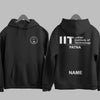
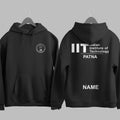
And when exam day comes — wear something you feel good in. Sounds trivial, but confidence is partly physical. Students who've copped the Batch Nexus customizable hoodies from KS Verse will tell you there's something about wearing your college identity into an exam that hits different. Especially when you've actually prepped for it.
Final Word: 3 Days Is Enough If You Stop Wasting the First 2
You don't need a miracle. You need a plan, a timer, and the discipline to execute without distractions for 72 hours.
The students topping midsems at IIT Kanpur and IIT Delhi aren't working harder than you. They're working smarter, earlier within those 3 days. They triage, they compress, they simulate, and they sleep.
Now you have the same system. The question is whether you'll actually use it or spend Day 1 convincing yourself you still have time.
You do. But not for much longer. Start now.