






























































































































































Featured image by Church of the King on Unsplash
Your batchmate just hit #3 Product of the Day on Product Hunt — from his hostel room, between two mid-sems, running on Maggi and four hours of sleep. Meanwhile, you're still debating whether to do that DSA grind or crack open the research paper your prof assigned three weeks ago. This is the IIT to Product Hunt pipeline, and it's more real, more accessible, and more urgent than any placement prep sheet you've bookmarked.
Why IIT Students Are Shipping Products Instead of Just Studying Them
The shift is quiet but massive. Walk into any hostel common room — IIT Bombay, IIT Delhi, IIT Madras — and you'll find at least one team huddled around a laptop, not solving assignments, but building something they plan to actually launch.
The reason? The opportunity cost of not building has never been higher. A Product Hunt launch, a viral GitHub repo, or a ₹10K MRR SaaS tool does more for your career story than a 9.2 CGPA ever will in a product or startup role.
Campus culture has also shifted. The student who interned at a FAANG used to be the legend. Now the legend is the one who shipped something 500 people paid for.
The IIT to Product Hunt Pipeline: How It Actually Works
This isn't magic. It's a repeatable pattern that students across IITs, NITs, and BITS have figured out. Here's the actual breakdown:
Step 1: Find the Problem in Your Own Campus Life
The best student-built products solve problems the founders lived through. Attendance trackers. CGPA calculators. Internship cold-email tools. Mess menu aggregators. Your campus is your first user research lab.
- Talk to 20 students about their most annoying daily friction points
- Ignore ideas that need massive infrastructure — start with software, tools, or content
- Validate by checking if people would use a Google Form version of your idea right now
Step 2: Build in Public from Day Zero
Don't wait until it's perfect. Tweet (or post on LinkedIn) the moment you start building. This creates accountability, early followers, and a launch audience before you have a product.
- Post weekly build logs — what you built, what broke, what you learned
- Share your ugly MVP screenshots. People love the messy reality
- Tag relevant communities: Hacker News, Indie Hackers, r/SideProject
Step 3: Get 50 Beta Users Before You Launch
Product Hunt rewards traction, not just the product. If you show up on launch day with 50 people already using it, the algorithm notices.
- DM your college WhatsApp groups first — your campus network is underrated
- Use the IIIT and NIT Warangal developer communities — these are seriously active builder pockets
- Offer lifetime free access or early adopter perks to first 50 users
- Ask for brutal feedback, not validation
Step 4: Engineer Your Product Hunt Launch Week
A Product Hunt launch is not a one-day thing. It's a week-long operation.
- Day -7: Find a hunter with 500+ followers who will post your product
- Day -3: Prep your launch assets — screenshots, demo GIF, tagline
- Day 0: Launch at 12:01 AM PST. Be awake. Respond to every comment
- Day 0: Send personal messages to everyone who said they'd support — not a blast email, actual DMs
- Day +1: Write a post-launch thread on LinkedIn about what happened, numbers and all
What the Students Who Actually Shipped Have in Common
You'll notice patterns when you talk to students who've successfully gone through the IIT to Product Hunt pipeline. It's not about branch, CGPA, or how many hackathons they've won.
- They ship ugly first. V1 is always embarrassing. That's the point.
- They treat rejection as data. A bad Product Hunt launch is a research report, not a failure.
- They operate in sprints. Two weeks to MVP. No more. Unlimited runway kills momentum.
- They have one obsessed co-founder. Solo is hard. Two people with different skills and the same obsession is the winning combo.
- They don't wait for placement season to validate themselves. The product does that for them.
The Hostel Room Setup That Makes This Possible
Let's be real about the actual environment where these products get built. It's not a fancy co-working space. It's a 10x12 hostel room with bad WiFi, a mattress on the floor, and three open tabs of Stack Overflow.
The constraint is the feature. No office politics. No long commutes. Access to 500 smart, frustrated potential users walking distance away.
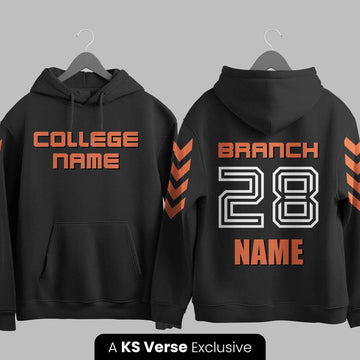
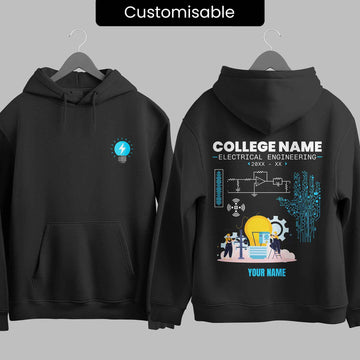
The builders you'll spot are usually the ones in a beat-up IIT Kharagpur or BITS hoodie at 2 AM in the common room. At KS Verse, the 320GSM heavyweight hoodies have basically become the unofficial uniform of late-night shipping sessions — not because anyone planned it, but because you need something that survives an all-nighter and still looks like you meant to wear it.
Common Traps That Kill Student Products Before Launch
Most student products die in the gap between idea and launch. Here's where they get stuck:
- Perfectionism disguised as polish: You don't need a landing page that looks like Linear. You need a working product.
- Building for imaginary users: If you haven't talked to 10 real potential users, you're guessing. Stop guessing.
- Over-engineering early: Microservices for an app with zero users is not architecture, it's procrastination.
- Waiting for the perfect time: After end-sems. After placements. After internship. There is no perfect time. Ship anyway.
- Keeping it secret until it's ready: By the time it's ready, you've lost six months of audience-building.
How This Changes Your Placement and Startup Game Permanently
Here's the thing nobody tells you in placement prep sessions: a Product Hunt launch that gets 200 upvotes is worth more in a product role interview than most internships.
You have a story. You have metrics. You have user feedback. You made decisions under uncertainty with real stakes. That's the interview answer every PM and founder role is looking for.
And if placement isn't your goal? A live product with real users is your seed round pitch. Investors who write ₹50L cheques to student founders aren't doing it on vibes — they're doing it because the student already proved they can ship.
What to Put on Your Resume vs. Your Portfolio
- Resume: Product name, launch date, platform ranking, user count, MRR if applicable
- Portfolio: The full story — problem, process, pivots, lessons, what you'd do differently
- LinkedIn: The build-in-public thread that shows your thinking in real time
The Identity Shift That Happens When You Actually Ship
This is the part that doesn't show up in any framework or playbook. When you go from student who has ideas to student who ships products, something in your campus identity changes permanently.
People start coming to you with problems to solve, not just questions to answer. Seniors from three batches ahead slide into your DMs. Your profile starts attracting the right kind of attention.
The IIT to Product Hunt pipeline isn't just a career strategy. It's an identity upgrade. And identity, once shifted, compounds.
The students living this right now — building in hoodies, shipping from hostels, launching before convocation — they're not waiting for permission. They're building the résumé no placement consultant can help you fake. Whether you're at IIT Roorkee or any campus in the KS Verse universe, the pipeline is open. The question is whether you're in it.
Ship first. Perfect later. That's the only rule that matters.