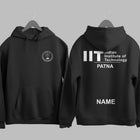



































































































































































































Featured image by Muhammad Zaid on Unsplash
You set the timer. 25 minutes. You're going to crush it today. Twelve browser tabs, one half-eaten Maggi, and a Reddit spiral later — the timer goes off and you've read the same derivation four times without retaining a single thing.
The Pomodoro Technique isn't broken because you're lazy. It's broken because it was never designed for the kind of deep, complex material you're dealing with in an engineering curriculum. There's a better way.
Why Pomodoro Fails Engineering Students
Pomodoro works beautifully for task-based work — writing, coding small features, answering emails. But thermodynamics, signal processing, or organic chemistry? These subjects demand sustained, deep cognitive engagement, not fragmented 25-minute sprints interrupted by forced breaks.
Every time that timer cuts you off mid-concept, your brain loses the thread. You're not building depth — you're just logging hours and feeling productive without actually becoming productive.
The Method That Actually Works: Interleaved Active Recall
Cognitive science researchers at universities like UCSB and Carnegie Mellon have studied this for decades. The most effective study strategy combines two principles:
- Active Recall: Instead of re-reading notes, force your brain to retrieve information from scratch — close the book and explain the concept out loud or on paper.
- Interleaving: Mix subjects or topic types within a single session instead of blocking one subject for hours.
Together, these two techniques create the most durable, exam-ready knowledge your brain can build. The difficulty feels real because the learning is real.
How to Actually Implement This in a Hostel Room
Step 1: Build a 90-Minute Deep Work Block
Forget 25 minutes. Research on ultradian rhythms suggests your brain operates in 90-minute focus cycles. Work with your biology, not against it.
- Pick 2-3 topics from different subjects — not the same chapter repeatedly.
- Study Topic A for 30 mins, then shift to Topic B for 30 mins, then return to Topic A.
- The deliberate context-switching feels harder. That friction is desirable difficulty — it forces deeper encoding.
Step 2: Replace Re-Reading With Retrieval
Re-reading your notes feels productive. It isn't. The illusion of fluency is the enemy of actual learning.
- After studying a concept, close everything and write down what you remember — no peeking.
- Use past year question papers as your primary study material, not supplementary material.
- Explain concepts out loud to yourself or a roommate. If you can't teach it simply, you don't know it yet.
Step 3: Strategic Spacing Over Marathon Sessions
Cramming the night before midsems isn't a strategy — it's a panic response. Spaced repetition means revisiting material at increasing intervals: after 1 day, then 3 days, then a week.
- Tools like Anki are built exactly for this. Free, powerful, and ruthlessly effective.
- Even 20 minutes of spaced review beats 3 hours of passive re-reading every single time.
The Mindset Shift Nobody Talks About
The real reason most students underperform isn't intelligence or effort — it's mistaking comfort for learning. Highlighting feels productive. Re-reading feels productive. Watching lecture recordings at 1.5x feels productive.
None of it compares to sitting with a blank page at 2 AM in your KS Verse hoodie, genuinely struggling to reconstruct a proof from memory — because that struggle is exactly where the learning happens.
Embrace the difficulty. That's the whole method.
TL;DR — Your New Study Stack
- 90-minute blocks instead of 25-minute Pomodoro sprints
- Interleave 2-3 subjects per session for stronger memory formation
- Active recall over re-reading — close the book, retrieve, verify
- Spaced repetition using Anki or even a simple notebook system
- PYQs as primary material — always study towards the exam format
Your CGPA doesn't care how many hours you logged. It cares how well your brain encoded and retrieved information under pressure. Study smarter, not just longer — and actually retain what you grind for.