



































































































































































































Featured image by Sanket Mishra on Unsplash
You've been awake since 2 AM. Fourth night in a row. Three tabs of notes open, one cup of cold chai sitting on your desk, and a Notion board that's basically a monument to your anxiety. You call this productive. Your body calls it slow self-destruction. Welcome to grind culture — the most glorified trap on every Indian campus.
Here's the uncomfortable truth nobody in your department will say out loud: rest is productive, and the students who figure that out before third year tend to actually win at placement season.
The Grind Culture Myth That's Failing Indian Campus Students
Somewhere between JEE prep and first-year orientation, we collectively decided that suffering equals effort, and effort equals results. That's a deeply broken equation.
The student who sleeps four hours and flex-posts about it on Instagram isn't grinding harder. They're operating at 60% cognitive capacity and calling it hustle. Sleep deprivation literally impairs the prefrontal cortex — the part of your brain you need for problem-solving, decision-making, and, oh right, cracking your DSA interviews.
- Stanford sleep research shows that 17-19 hours of being awake impairs performance equivalent to a blood alcohol level of 0.05%.
- Memory consolidation — literally how your brain saves what you studied — happens during deep sleep. No sleep, no retention. Period.
- Chronic fatigue raises cortisol levels, which tanks your motivation and tanks your immune system right before your mid-sems. Classic.
The grind culture on campus isn't a productivity hack. It's a prestige performance. And it's costing students their mental health, their grades, and ironically, their actual output.
What "Rest Is Productive" Actually Means (It's Not Netflix All Day)
Before you screenshot this and send it to your roommate as justification for skipping the assignment — let's be clear. Rest isn't the absence of work. It's intentional recovery that makes your work count.
There are four types of rest that matter for a campus student's brain:
- Physical rest: 7-8 hours of actual sleep. Non-negotiable. This is where your brain consolidates everything from the lecture you half-attended.
- Mental rest: Micro-breaks every 90 minutes. The Pomodoro technique exists for a reason. Your brain is not a machine — even machines overheat.
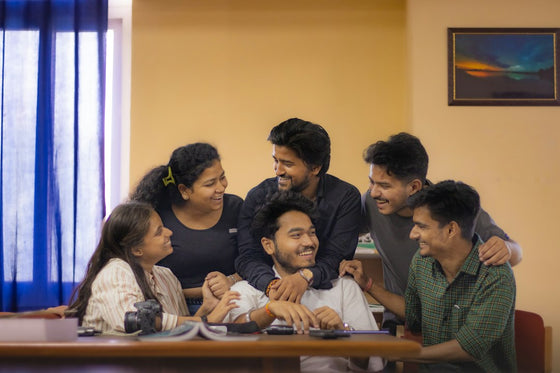
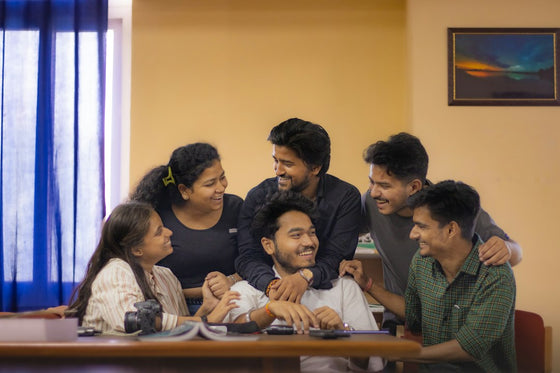
- Social rest: Spending time with people who actually recharge you, not just your study group that stress-spirals together.
- Creative rest: Consuming something that has nothing to do with your branch. A playlist. A walk around campus. Staring at the sky from the hostel terrace counts.
Structured rest is what separates high performers from people who burn out by fifth semester. The students coasting into their dream PPOs aren't the ones who pulled the most all-nighters. They're the ones who recovered fast, thought clearly, and showed up consistently.
How Burnout Actually Happens in Engineering and Medical College
Burnout doesn't arrive with a dramatic announcement. It sneaks in around Week 6 of a semester, right after your first quiz, when everything starts feeling slightly pointless and weirdly heavy.
The warning signs campus students consistently ignore:
- You're studying but nothing is sticking, and you've read the same paragraph four times.
- Small inconveniences — mess food, a slow Wi-Fi connection — are making you disproportionately angry.
- You feel guilty resting, so you don't rest, which makes everything worse.
- Your social battery is permanently at zero, even around people you genuinely like.
Burnout is not a personal failure. It's a predictable biological response to sustained overload without recovery. If you're an IIT Bombay or NIT Trichy student grinding through a brutal semester, your nervous system doesn't care about your CGPA target. It will shut you down one way or another — either strategically through rest, or forcibly through illness and breakdown.
The High-Performer's Approach to Rest on Campus
Here's what the students with strong resumes and decent GPAs are actually doing differently. Spoiler: it's boring, consistent, and not aesthetic at all.
Build a Non-Negotiable Sleep Floor
Decide your minimum. Six hours? Six and a half? Protect that number like it's your CGPA. Everything else — late-night Discord, one more episode, one more scroll — gets cut before sleep does.
Time-Block Your Recovery Like You Time-Block Your Study
Put your rest in the calendar. Literally. A 20-minute walk after dinner. A no-phone hour before bed. A weekend morning with zero academic guilt. If it's not scheduled, it gets sacrificed to urgency.
Separate Your Physical Space from Your Study Space
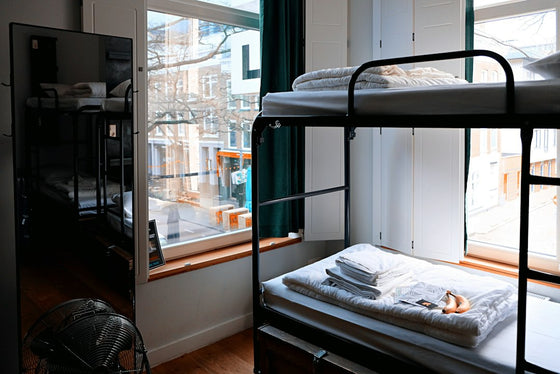
This one's rough in hostels — we know. But even pulling your chair away from the desk, sitting on the bed, or stepping outside the room signals your brain to shift gears. Your nervous system needs context switches, not just time switches.
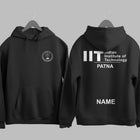
Speaking of spaces — there's something weirdly grounding about throwing on a campus drop hoodie just to sit on the terrace and decompress. Not everything needs to be productivity theatre. Sometimes a heavy 320GSM heavyweight hoodie from KS Verse and thirty minutes of doing absolutely nothing is the most productive thing you'll do all week.
Protect One Full Day Per Week
One day. Not a half-day where you feel guilty about the syllabus in the background. One real day of recovery. Top athletes call this active recovery. Campus students call it "wasting time." One of these groups has figured out performance science. The other is sleeping through their alarm for the third time this week.
Why Grind Culture Hits Harder at Competitive Campuses
The social proof problem is real. When everyone around you is visibly grinding, stopping feels like falling behind. This is the illusion that grind culture runs on — it's a collective performance, not a proven strategy.
At places like BITS Pilani or IIIT Hyderabad, the ambient stress level is legitimately high. The course loads are real. The competition is real. But the response to that pressure — eliminating rest entirely — is not a solution. It's just a slower way to underperform.
The students who thrive in high-pressure environments are the ones who treat recovery as a competitive advantage, not a weakness. They rest on purpose so they can work with precision. That's the actual cheat code.
Resting Without Guilt: The Mindset Shift You Actually Need
The guilt is the trap. You rest, but you feel bad about resting, so you can't actually recover, and then you go back to studying still exhausted. Repeat until burnout.
You need to genuinely believe that rest serves your goals — not competes with them. That reframe is not soft. It's neuroscience.
- Rest is not a reward for finishing work. It is part of the work.
- You are not lazy for needing sleep. You are a human being with a biological operating system that has documented requirements.
- The most ambitious version of you needs recovery to exist. The exhausted version of you makes worse decisions, writes worse code, and tanks interviews.
And while we're at it — stop wearing exhaustion as a badge. The next time someone asks how you're doing and the honest answer is "completely destroyed," that's not a flex. That's a signal.
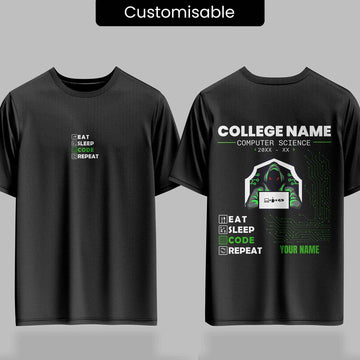
Whether you're a medical student at AIIMS running on hospital rounds and caffeine, or a final-year engineer stress-building your portfolio at midnight in your 240GSM KS Verse oversized tee — your output quality is directly tied to your recovery quality. That is not motivational poster content. That is physiology.
Practical Rest Habits That Actually Fit a Campus Schedule
- 10-minute body scan before bed: No screens. Just lie down and notice where you're holding tension. Sounds soft, works hard.
- Eat lunch away from your laptop: Twenty minutes of genuine mental break mid-day resets your focus for the afternoon.
- Cap your caffeine at 2 PM: Anything after that is borrowing tomorrow's energy with interest.
- Batch your communications: Checking WhatsApp every seven minutes is not multitasking. It's fragmented attention with a social media wrapper.
- Create a hard stop for studying: Pick a time. Stick to it. The work will still be there tomorrow, and tomorrow-you will handle it better if today-you actually slept.
The Bottom Line: Rest Smarter, Perform Better
Rest is productive. Not because some wellness influencer said so, but because every high-performance system — human, mechanical, computational — requires downtime to function at capacity. Your campus career is no different.
The grind is not the goal. The results are the goal. And the fastest path to results runs directly through intentional recovery, consistent sleep, and the radical act of not apologizing for being a person who needs rest.
Wear your campus identity loud — grab something from the latest KS Verse campus drops, pull on your Batch Nexus hoodie, and sit with that. Rest isn't retreat. It's strategy. The grind will always be there. Make sure you are too.