























































































































































































Featured image by Church of the King on Unsplash
Nobody warns you about this part. You crack one of the toughest entrance exams on the planet, land a seat at a top engineering or medical college, and then spend the next four years quietly wondering if you're doing college wrong. Peer pressure in college is real, it's subtle, and it hits different when you're surrounded by genuinely brilliant people. This isn't about someone handing you a cigarette in a dimly lit corridor. It's the 2 AM hostel conversation where everyone seems to have a startup idea, a 9-pointer CGPA, or a job offer — and you're just trying to survive your next mid-sem.
Here's how to handle peer pressure without losing the one thing that actually matters: yourself.
Why Peer Pressure in College Hits Harder Than You Think
School peer pressure was mostly surface-level — what you wore, who you sat with at lunch. College peer pressure operates at a deeper, more psychological frequency.
- The comparison trap is constant. Your wing-mate just bagged a research internship. Your lab partner cleared a competitive exam. Your roommate's already networking on LinkedIn. The feed never stops.
- Identity is still forming. Between 18 and 22, you're literally still figuring out who you are. That makes you more susceptible to shaping yourself around what others seem to value.
- FOMO is monetized and weaponized. Every party, every hackathon, every side-hustle trend makes you feel like sitting this one out means falling behind permanently.
The pressure isn't always negative. Sometimes it pushes you. But when it starts overriding your own instincts consistently, that's when you've crossed a line worth paying attention to.
The First Step: Separate What You Actually Want vs. What You've Absorbed
This is uncomfortable, but necessary. Sit with this question: How many of your current goals are actually yours?
The branch you're pursuing, the companies on your dream list, the hobbies you show off on your resume — run each one through this filter. Did you choose this because it genuinely excites you? Or because it's what people around you seem to be doing?
- Write down your top five goals right now.
- Next to each, honestly write: "My idea" or "Absorbed from environment."
- Don't judge what you find. Just see it clearly.
Most students doing this exercise for the first time are genuinely surprised. And that surprise is the beginning of building real clarity.
How to Deal With Peer Pressure in Real Campus Situations
When Everyone's Chasing Placements and You're Not Sure Yet
Placement season turns campuses into pressure cookers. The entire ecosystem — your seniors, your parents, LinkedIn — is telling you there's only one path. The truth is, your timeline is not your batchmate's timeline.
- It's okay to not sit for Day 1 companies if it doesn't align with what you want to build.
- It's okay to skip the finance recruiting grind if numbers genuinely don't excite you.
- What's not okay is making a 5-year career decision purely because your hostel friends are doing it and you don't want to be the odd one out.
When the Party Scene or Substance Culture Gets Loud
This one requires the most directness. Knowing how to handle peer pressure around substance use is non-negotiable for your actual wellbeing.
- A clean, confident "I'm good, thanks" is a complete sentence. You owe no one an explanation.
- People who genuinely respect you won't push past your first no. That filter is useful information.
- Build your social identity around things you actually enjoy — it makes refusal effortless because you're already full.
The students who navigate this best aren't the ones who lecture everyone else. They're the ones who are clearly having their own kind of good time on their own terms.
When Academic Pressure Makes You Feel Like You're Falling Behind
Someone in your batch has a 9.8. Someone else is already publishing papers. You have a 7.1 and a passion project nobody's heard of yet. Stop treating your academic journey like a race where everyone's running the same track.
- Understand the difference between being challenged by your peers and being diminished by comparison to them.
- One makes you better. The other just drains you.
- Find one or two people who push you to grow — not hundreds of benchmarks that make you feel perpetually inadequate.
Build an Identity Anchor (This Is the Real Protection)
The students who handle peer pressure best share one thing in common: they know who they are outside of college metrics.
Your identity anchor is the stuff that stays consistent regardless of your CGPA, your internship status, or your social media presence. It might be your creative outlet, your values, your hometown hustle, or your sense of humor. Whatever it is, it needs to be tended to deliberately.
- Have at least one activity or interest that has nothing to do with your academic or professional identity.
- Protect it from optimization. Not everything needs to be a skill on your resume.
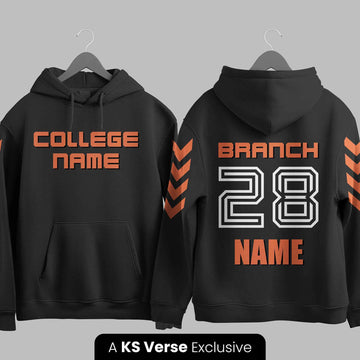
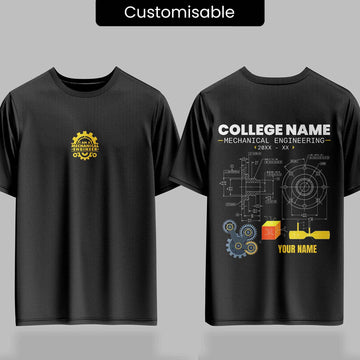
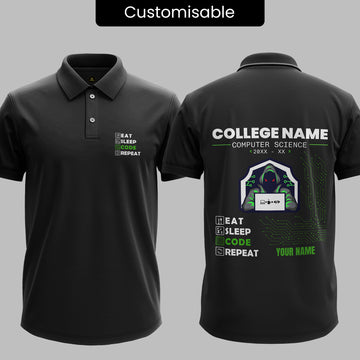
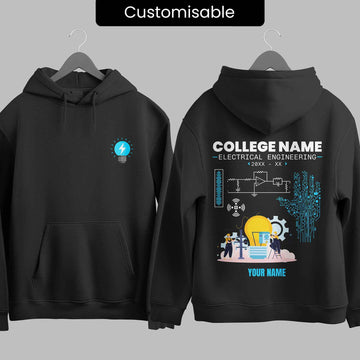
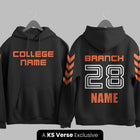
- Wear what you like, not what signals the right crowd membership. Students at IIT Bombay or NIT Trichy who rock their campus identity unapologetically — a beat-up hoodie, their college tee, their own aesthetic — are usually the ones most comfortable in their skin. There's a reason KS Verse's 320GSM heavyweight hoodies and 240GSM oversized tees sell hard on campuses: students want to represent where they come from, not who they think they should be.
The Art of Saying No Without Burning Bridges
Here's where most people overcomplicate things. They either become a pushover or they go full contrarian and alienate everyone. The real skill is selective participation — being warm, present, and genuinely connected, while still having non-negotiable limits.
- Be curious, not defensive. When asked why you're not doing something, respond with interest in their choice rather than a defense of yours. Deflect without dodging.
- Have your go-to alternative. "I'm not doing X, but I'm down for Y" keeps you socially connected without compromising your limits.
- Know your real ones. The group that respects your choices and doesn't need you to perform for them — that's who you invest in.
When Peer Pressure Is Actually Useful (Yes, Really)
Not all of it is bad. Let's be honest about that. The right kind of peer pressure is one of the most underrated growth accelerators in college.
If being around certain people makes you work harder, read more, think bigger, or care more about your craft — that's not pressure, that's a good environment. The key is that you're choosing it consciously, not drifting into it reactively.
- Actively seek out people who are doing things you genuinely admire.
- Let their energy raise your standard — without letting their metrics define your worth.
- Students across campuses from BITS to IIIT to AIIMS have used their peer environment as rocket fuel — but only the ones who stayed grounded enough to absorb the energy without losing direction.
Your Senior Year Self Is Watching Your Junior Year Choices
Here's the mental model that cuts through all the noise. Imagine your final-year self — the version of you who's figured a few things out, has some perspective, and doesn't take the small stuff as seriously. What would that person think of the decision you're about to make under pressure right now?
Would they be proud that you held your line? Or would they cringe that you gave something up just to fit in for a semester?
The campus culture you build for yourself matters. The batch you graduate with becomes part of your story. Own it like you mean it — from the way you handle pressure in the classroom to the way you carry yourself in the hostel corridor wearing your Campus Legend hoodie from KS Verse or repping your batch with Batch Nexus custom merch that actually means something. Check out the full campus drops collection and find your identity in what you wear, not just what others expect.
Final Word: Pressure Is Data, Not Destiny
Every time you feel peer pressure, you're actually receiving information. It's showing you where your boundaries are, what you value, and who around you respects that. Use it as a diagnostic tool, not a verdict on your worth.
Handle peer pressure by building yourself so solidly from the inside that external noise becomes background static. That's not arrogance. That's the work. And it starts now, in exactly the campus you're already in.