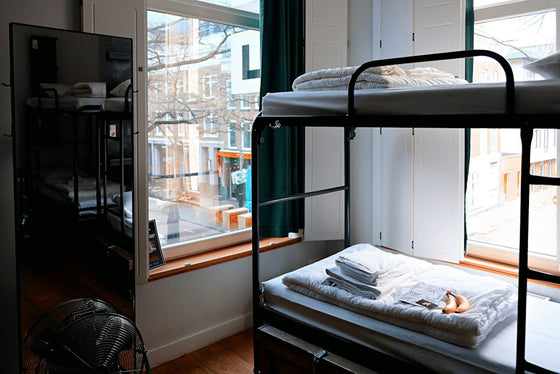

























































































































































































Featured image by Sanket Mishra on Unsplash
Your roommate's alarm goes off at 5 AM. He doesn't wake up. You do. Every. Single. Day. Setting boundaries with roommates isn't soft — it's survival. Whether you're in a double-sharing at IIT Kharagpur or a six-person dungeon at some NIT, your hostel room is the one place you need to function as a human being. If that space is chaotic, your GPA, your sleep, and your sanity go down together.
This isn't a therapy blog. This is what your senior should've told you before Day 1 of hostel life.
Why Roommate Boundaries Matter More Than You Think
Most hostel conflicts don't start with a big fight. They start with a small annoyance you let slide once, twice, then a hundred times — until you're silently seething during a 3 AM study session while your roommate blasts BGMI with zero headphones.
The cost of not setting boundaries isn't just discomfort. It's academic performance, mental health, and relationships you actually wanted to keep. Research consistently shows that poor sleep and high-conflict living environments directly tank cognitive performance. You didn't crack JEE or BITSAT to fail because your roommate left dishes on the desk for two weeks straight.
The First Week is Everything: Set the Tone Early
The biggest mistake freshers make is being too polite in week one. You're trying to make friends, which is smart. But there's a difference between being warm and being a pushover from day one.
The first week sets the social contract for the entire year. What you allow now becomes the default expectation. Talk early, talk casually, and establish how you both want the space to work — before problems force the conversation in a tense direction.
What to Discuss in That First Week
- Sleep schedules: Are you a morning person? A night owl? Neither is wrong, but silence during certain hours needs to be agreed on.
- Study vs. chill hours: Especially around mid-sems and end-sems — know when the room needs to be a library, not a lounge.
- Guests and visitors: How late is too late? How often is too often? This one causes 70% of hostel room fallouts.
- Shared space rules: The desk, the charging points, the dustbin rotation — mundane stuff that becomes massive resentment if ignored.
- Music and noise: Headphones after 11 PM. This should be non-negotiable everywhere, but make it explicit.
How to Actually Have the Boundary Conversation Without It Getting Weird
Nobody wants to be the person who "complains." But there's a version of this conversation that doesn't make you look like an uptight hall monitor — and it starts with timing and framing.
Never bring up issues when you're already frustrated. The conversation you have at peak irritation is never the one that solves anything. It just creates a new conflict on top of the old one.
A Simple Framework That Actually Works
- Pick a neutral moment: Over chai, after dinner, when both of you are relaxed. Not mid-argument.
- Use "I" statements: "I've been struggling to sleep with the lights on after midnight" lands better than "You always keep the lights on."
- Offer a trade, not a demand: "I'll keep my side clean if we can agree on a lights-out time on weekdays." It's a negotiation, not a verdict.
- Keep it short: Say what you need, hear what they need, land on something workable. Don't turn it into a two-hour session.
- Follow up lightly: A week later, casually check in. "Hey, this working okay for you?" signals that you're both in it together.
The Most Common Hostel Boundary Violations (And How to Handle Each)
1. Noise and Sleep Disruption
This is the number one killer of roommate relationships in Indian hostels. Late-night calls, YouTube without earphones, loud typing — it adds up.
- Agree on a "quiet hours" window — 11 PM to 7 AM works for most students.
- Invest in decent earplugs or noise-cancelling earphones yourself as backup.
- If it's chronic, bring in your hostel warden as a last resort — not a first move.
2. Borrowing Without Asking
Your charger, your shampoo, your extra chair — these become communal property by default unless you say otherwise. And it's not theft, it's assumption.
- Just say it plainly: "Please ask before borrowing, I'm fine with it but I just want to know." Most people respect that immediately.
- For recurring items like stationery or adapters, designate a "borrow zone" so there's no guesswork.
3. The Perpetual Guest Problem
Some people treat their room like a social hub. Their friends are there at 9 PM, 11 PM, sometimes past midnight. Your room is your personal space, not an extension of the common room.
- Set a simple rule: guests leave by a certain time on weekdays. No drama, just logistics.
- If your roommate regularly needs the room for something personal, rotate — one of you steps out for an hour. Mutual, fair.
4. Cleanliness Standards That Don't Match
You're neat. They're not. Or vice versa. Neither of you is objectively right — but you have to share 120 square feet.
- Split the room into personal zones and a shared zone. Personal zones = your business. Shared zone = mutual responsibility.
- Do a Sunday reset together — even 10 minutes. Makes it a habit, not a confrontation.
When It's Beyond Normal: Recognizing Toxic Roommate Behavior
There's a difference between a roommate who's messy and one who's genuinely disrespectful. If someone is consistently dismissive of your requests, invades your privacy, or makes you feel unsafe — that is not a boundary problem, that's a welfare issue.
In that case, document what's happening, talk to your hostel warden or student welfare office, and explore room-change options. No academic goal is worth a hostile living situation. Your college has systems for this — use them without guilt.
Build the Right Hostel Culture From Your Side
The best thing you can do for hostel harmony is model the behavior you want. Be the roommate you wish you had. If you're leaving for class early, keep the noise down. If you're having a rough week, communicate it — "I've got a major assignment due, I need the room quiet for the next three days" is not a lot to ask.
The students who navigate hostel life best aren't the ones who avoid conflict. They're the ones who address it early, stay direct without being harsh, and extend the same respect they expect back.
Between late-night study sessions and early-morning lectures, your hostel fit matters too. Plenty of students at IIT Bombay and NIT Trichy are reaching for KS Verse's 320GSM heavyweight hoodies on those cold corridor nights — the kind of hoodie that actually holds up through a full semester of hostel abuse. When your room feels like a warzone, at least your drip can stay sorted. Check out the full campus drops collection if you want gear that matches the life.
The Long Game: Roommates Who Become Friends
Here's the part nobody tells you: the roommates you set clear boundaries with early almost always become the ones you're closest to by third year. Clarity builds trust. Trust builds friendship.
The awkward "hey, can we talk about the noise" conversation you're dreading? That's the one that turns a strangers-who-share-a-room situation into something that actually works. Some of the best people you'll meet in college are going to be the person sleeping three feet away from you.
Hostel life is one of those things you either actively shape or passively survive. The difference is usually just one honest conversation had at the right time.
Students repping their campus identity — whether it's BITS drops or IIIT campus merch — know that college pride starts with owning your space. Own your hostel room the same way. Wear the 240GSM oversized tee, keep the room functional, and be the person on your floor who actually has their life together.
Your CGPA will thank you. So will your future self.