




























































































































































Featured image by Church of the King on Unsplash
Every placement season, the same question echoes across every OAT, hostel corridor, and mess table: domestic CTC or international offer? And increasingly, the answer coming out of IITs is leaning heavily toward the passport stamp. International offers on the rise aren't just a LinkedIn flex — they reflect a real structural shift in where the best engineering talent from India is choosing to plant its flag.
Why International Offers Are Spiking at IITs Right Now
This isn't just vibes. The numbers back it up. Global tech, finance, and consulting firms have been aggressively increasing their India campus presence over the last three placement cycles. Companies like Jane Street, Optiver, Citadel, Google APAC, and Stripe have turned IIT placement seasons into serious hunting grounds.
The pull factors are obvious — compensation packages that make even the best domestic CTC look like a rounding error. But money isn't the whole story here.
- Exposure: Working in Singapore, the US, or the UK on cutting-edge infrastructure changes your trajectory permanently.
- Career optionality: An international stint at 22 opens doors domestically that a domestic job simply doesn't.
- Immigration pathways: For a significant chunk of IIT grads, the long game involves a PR or citizenship route — and an international offer is step one.
- Equity and ESOP structures: Offshore roles often come with equity that compounds over time, not just base salary.
Which Sectors Are Pulling IIT Grads Abroad?
Quantitative Finance and Trading Firms
This is where the absolute cream of IIT placements is going. Jane Street, Optiver, IMC Trading, and Citadel have become the new IIT dream firms — replacing the old obsession with McKinsey or Google for the top percentile of students.
These roles demand deep math, probability, and coding fundamentals. If you spent your second year grinding CP instead of chasing SPI, this was always your lane.
- Typical roles: Trader, Quant Researcher, Software Developer
- Base + bonus packages: Often $150K–$300K+ in US or Singapore terms
- Primary IITs targeted: IIT Bombay, IIT Delhi, IIT Madras, IIT Kanpur
Big Tech — But Specifically Offshore Roles
Getting a Google or Meta offer isn't new for IITs. What's changed is the proportion of international location roles versus India-based roles being offered and accepted. Students are now actively negotiating for Singapore, London, or New York postings rather than defaulting to Bangalore.
The delta in compensation between a Google India role and a Google Singapore role is substantial enough to matter for a 22-year-old making their first real financial decision.
Management Consulting — Global Cohorts
BCG, McKinsey, and Bain have always recruited at IITs. But now, students are increasingly joining global cohorts based out of Dubai, Singapore, or directly in the US — not just the India offices. The exposure at a global consulting firm office is categorically different from the India office track.
IIT Bombay vs IIT Delhi vs IIT Madras: Who's Getting the Most International Offers?
Honestly, the top five or six IITs dominate the international offer landscape. IIT Bombay and IIT Delhi consistently see the highest volume of international placements, partly due to alumni networks and partly due to recruiter familiarity with these campuses.
But IIT Madras has been closing the gap fast — especially in quant and deep tech roles. IIT Kanpur punches above its weight in pure research and academia-adjacent international roles.
If you're at one of the newer IITs — say, IIT Hyderabad or IIT Indore — the international offer count is lower but growing. The trick is being the person who doesn't wait for the offer to come to campus. Off-campus applications and international internships are how newer IIT students are breaking through.
What Skills Are Actually Getting These International Offers?
This is where most students mess up their planning. They chase the brand name of the company without understanding what skills those companies are actually filtering for.
- Competitive Programming (CP): Still the entry ticket for quant firms and top product companies. CF rating of 1800+ is a real differentiator.
- Systems knowledge: Deep understanding of OS, networking, and distributed systems for infra-heavy international roles.
- Mathematics and statistics: For quant and data-heavy roles, your probability and linear algebra fundamentals matter more than your ML framework knowledge.
- Strong communication: Global roles involve cross-cultural teams. Being technically brilliant but unable to articulate your thinking is a fast rejection.
- International internship experience: A DAAD fellowship, a research stint at ETH Zurich, or a summer at a Singapore startup changes how international recruiters read your resume.
The Domestic vs International Debate — What Nobody Tells You
Here's the brutal honest take that your seniors won't always give you: an international offer isn't automatically the right choice for everyone.
If you're building toward founding a startup in India, a two-year stint at a Bangalore unicorn with deep product exposure and local network building might be worth more than a Singapore fintech role where you're writing backend code nobody outside the firm ever sees.
But if your goal is financial independence early, research, or building global expertise — taking the international offer is almost always the right call at the entry level.
- Cost of living abroad eats into packages — especially London and SF. Singapore and Dubai are better on net savings.
- Visa dependency is real. An H-1B situation in the US is a decade-long lottery. Factor that into your 5-year plan.
- Coming back to India after 3-5 years abroad is easier than it's ever been — the startup ecosystem actively values returned engineers.
How IIT Grads Are Preparing Differently Now
The students landing these offers aren't just smart — they're strategic earlier. The preparation gap between a domestic offer and an international one starts in second year, not final year.
- They apply to international research programs (MITACS, DAAD, SN Bose) in their second or third year.
- They build GitHub portfolios and open-source contributions that are legible to global recruiters.
- They cold-email aggressively — something Indian students have historically been shy about.
- They join communities like Codeforces, attend global hackathons, and compete in ICPC seriously.
The hustle looks the same — late nights in hostels, surviving mid-sems, figuring out life on a 3,000 rupee monthly allowance. But the output they're building toward is fundamentally global now.
The Culture Shift — Identity, Pride, and What You Wear It On
There's something worth noting about how IIT culture itself has shifted. Students are more globally ambitious but simultaneously more rooted in campus identity. The pride in being from IIT isn't going anywhere — it's actually intensifying.
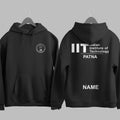
You see it in how students carry their campus identity into the world. Whether it's the 320GSM heavyweight hoodie from KS Verse that an IIT Kharagpur grad packs into their Singapore moving bag, or the 240GSM oversized tee that becomes their uniform during their first international internship — campus identity travels with you.
Check out the IIT Kharagpur drops or browse the full campus universe if you want gear that actually represents where you came from — because where you came from is increasingly opening global doors.
What This Means for NITs, BITS, and IIITs
The international offer surge at IITs is slowly creating a ripple effect. Top NITs like NIT Warangal and NIT Trichy are starting to see global firms expand their recruitment radar — especially in software and quant roles.
BITS Pilani has always had a strong international alumni network that feeds back into placements. And for IIIT students, the sheer depth of CS fundamentals being taught means the gap with IITs on international technical interviews is closing fast.
If you're at a top NIT or BITS, the international offer isn't out of reach — it just requires more off-campus effort and a stronger online presence. Students at BITS campuses and IIITs who are landing global roles are doing it through sheer preparation and network building, not waiting for the recruiter to show up on campus.
The Takeaway: International Offers Are the New Benchmark
The IIT placement ecosystem has evolved. International offers on the rise aren't a fluke — they're the result of a generation that grew up globally connected and refuses to limit its ambition to one geography.
Whether you're aiming for a quant desk in Singapore, a PM role at a London fintech, or a PhD at MIT as a stepping stone — the path exists, it's more accessible than it was five years ago, and the students who get there are the ones who start preparing before their final year.
Your campus gave you the foundation. What you build on it — and where you build it — is entirely up to you.