

































































































































































Featured image by AMIT RANJAN on Unsplash
Your CGPA is not your personality. And in most placement drives, it's barely even the deciding factor. The students who walk into interviews with a live portfolio project — something they built, broke, and rebuilt at 2 AM in the hostel — are the ones who get the offers. Everyone else is just reading from a resume that looks identical to the 300 others on the recruiter's desk.
This semester, before mid-sems eat your soul and the placement season panic sets in, is the single best time to start a portfolio project. Here's why — and more importantly, how.
What Is a Portfolio Project and Why Does It Even Matter?
A portfolio project is any self-initiated work you build, document, and showcase — a web app, a research paper, a design system, a data analysis dashboard, a hardware prototype, literally anything that proves you can do the thing, not just pass an exam about it.
Recruiters from Google, McKinsey, Goldman, Zomato, and every startup in between have said it publicly: they would rather see one strong project than a 9-pointer with zero practical output. That's not motivational fluff. That's hiring reality in 2024.
And yet, most students wait. They wait for the right idea, the right team, the right free weekend that never comes. Meanwhile, the one student in your batch who started early is now shipping features while you're still figuring out what to build.
The Real Reason Students Avoid Starting (It's Not Laziness)
It's fear of it not being good enough. Imposter syndrome hits hardest when you're sitting in a tier-1 college surrounded by people who seem to already know everything.
But here's the thing nobody tells you: every impressive senior portfolio you've ever seen started as a messy, half-broken, embarrassing first version. The GitHub commits don't lie. The first version is always ugly. That's the point.
- You don't need permission to start.
- You don't need your professor to assign it.
- You don't need a team of five or a ₹50,000 server budget.
- You need a problem you're curious about and a laptop that still charges without the cable at a specific angle.
How to Pick Your First Portfolio Project (Without Overthinking It)
The best project is one you'd actually use. Start there.
Step 1: Identify a real irritation in your daily campus life
Is the mess menu confusing? Is tracking attendance a nightmare? Does your college library system feel like it was designed in 1998? Build something that solves a problem you personally face. You'll stay motivated, and the story behind it is interview gold.
Step 2: Keep the scope embarrassingly small
- Week 1: Define the problem and sketch the solution on paper.
- Week 2-3: Build the most basic version that works. No design. No polish.
- Week 4: Show it to three friends. Collect brutal feedback.
- Week 5 onwards: Iterate. Document everything. Push to GitHub.
Small and finished beats big and abandoned every single time.
Step 3: Document as you build
Write a README. Post a LinkedIn update. Write a short blog about what broke and how you fixed it. Documentation turns a project into a portfolio piece. Without it, you just have code sitting in a private repo that no one will ever see.
Portfolio Projects vs. Internships: Which One Wins?
Both. But here's the nuance: a strong portfolio project can get you the internship in the first place. Internships are increasingly competitive, especially at product-based companies visiting IITs, NITs, and BITS campuses. The shortlist often happens before the coding test, based on resume screening.
Students from IIT Bombay and NIT Trichy competing for the same five SDE roles at a top startup — who stands out? The one with a deployed side project linked on their resume, or the one with two lines of coursework and a hackathon participation certificate?
A portfolio project is proof of initiative. Internships are proof of execution. You need both, but the project comes first.
What Kind of Portfolio Projects Actually Impress Recruiters
Forget the to-do list app. Everyone has built one. Here's what actually gets attention in 2024:
- Full-stack web apps with real users (even 50 users is impressive if it's solving a genuine problem)
- ML/AI projects with a clear problem statement, not just a Kaggle dataset you ran in a notebook
- Open source contributions — even small bug fixes to popular repos signal that you can read and work with real codebases
- Hardware + software projects — especially relevant for ECE and EE students from IIT Kharagpur or NIT Warangal
- Research-backed projects with a write-up or preprint — massive for students eyeing MS or PhD applications
- Design or product case studies for students targeting PM, UX, or consulting roles
The common thread? Specificity and intentionality. You need to be able to explain why you built it, what you learned, and what you'd do differently. That narrative is what separates a portfolio from a hobby.
How a Portfolio Project Changes Your Placement Season
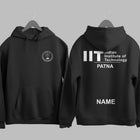
Placement season on campus is a specific kind of chaos. Everyone's grinding LeetCode at 11 PM, stress-eating at the mess, and wearing the same hoodie for three days straight — the kind of heavyweight campus hoodie that's basically a uniform when deadlines hit. The students who sail through it are the ones who prepared differently, not harder.
Here's what a strong portfolio project does for you during placements:
- Gives you a compelling answer to "Tell me about yourself" that isn't just a CGPA recitation
- Creates natural conversation hooks in technical interviews — interviewers love asking about real projects
- Demonstrates ownership, which is the single most valued trait at early-stage startups
- Sets you apart in mass recruitment drives at large companies where resumes blur together
- Builds genuine confidence — you've shipped something real, you know you can figure things out
Students at BITS campuses and IIITs have a particular edge here — the culture of building is stronger, and students who lean into it early consistently outperform in placement seasons.
The Mindset Shift That Makes Everything Easier
Stop thinking of a portfolio project as something you do for placements. Think of it as something you do because you're genuinely curious, and placements just happen to reward that curiosity.
The students who build the best portfolios aren't grinding for an offer. They're obsessed with a problem. They're up at midnight not because of anxiety but because the thing they're building is actually interesting to them.
That energy is visible. In interviews, in cover letters, in how they explain their work. You cannot fake genuine interest, and you don't have to — you just have to find something you actually care about solving.
Start This Week: Your 3-Day Portfolio Sprint
No more waiting for the perfect idea. Here's your no-excuses starting plan:
- Day 1: List 5 problems you've personally faced on campus this month. Pick the most interesting one.
- Day 2: Google if someone has already solved it. If yes, study their solution. If no, that's your gap.
- Day 3: Create a GitHub repo, write a 3-line problem statement in the README, and commit something — anything. A blank HTML file counts. You've started.
That's it. The momentum from Day 3 carries you further than any planning session ever will.
The students building real things this semester — in their hostel rooms, in department labs, at 1 AM over instant noodles, repping their campus identity in a campus drop hoodie that actually means something to them — those are the ones who'll have the most interesting things to say when placement season arrives.
Your portfolio project isn't just a resume line. It's evidence that you're someone who builds, not just someone who studies. Start this semester. Start this week. Start today.